
Reviewed · WESTERPLATTE & MUSEUM OF WWII TOURS
Gdansk: Museum of World War II – True Story of a Living Hell
War hits different inside this museum.
What makes this Gdańsk experience worth your time is the 20-room layout that keeps the story clear, even when it gets grim, plus the expert commentary that ties big events to what people in Poland actually faced. One possible drawback: it’s packed and detailed, so you’ll want a realistic pace and at least the full three-hour visit window.
I also like that it’s not just facts on walls. You walk through wartime everyday life via displays along the main corridor, then you move through objects like an Enigma machine and a Sherman tank. The museum itself is designed for getting around—there are lifts for the deeper levels—and audio support is available (headphones at the desk), which helps when you want to absorb without constantly stopping to read.
For value, this is strong if you want a guided, Poland-focused explanation rather than wandering on your own. If you prefer a lighter, casual museum outing, this will feel heavy—on purpose—so it’s best when you’re ready for the emotional weight.
In This Review
- Key highlights to know before you go
- Meeting the guide and setting expectations outside the Museum of World War II
- Inside the museum: how the exhibition keeps the story understandable
- The long corridor and daily life details that change how you read everything
- Gdańsk’s specific backstory: from World War I to a political limbo
- The objects that teach: Enigma, Stalin’s pipe, Sherman tank, and more
- Audio, video, and pacing: the tools that help you stay with the story
- Timing, route length, and where the museum lets you recharge
- Price and value: when $217.08 makes sense
- Who this tour fits best (and who should think twice)
- Should you book this Gdańsk WWII museum tour?
- FAQ
- What is the meeting point for the tour?
- How long does the tour last?
- Is the tour private?
- Is the museum ticket included?
- What language is the tour offered in?
- Is hotel pickup included?
- Are there audio headphones or translation support available?
- Is admission sometimes free?
Key highlights to know before you go

- A museum designed as one long, legible story across ~20 rooms, not scattered exhibits
- Everyday wartime life shown along the corridor axis, not only battles and politics
- Specific WWII objects used to explain the war’s mechanics (from communications gear to vehicles)
- Poland’s role in the war explained at multiple levels: geopolitical, military, and personal
- Audio help available on site, including translation via headphones
- Plan about three hours to avoid feeling rushed
Meeting the guide and setting expectations outside the Museum of World War II
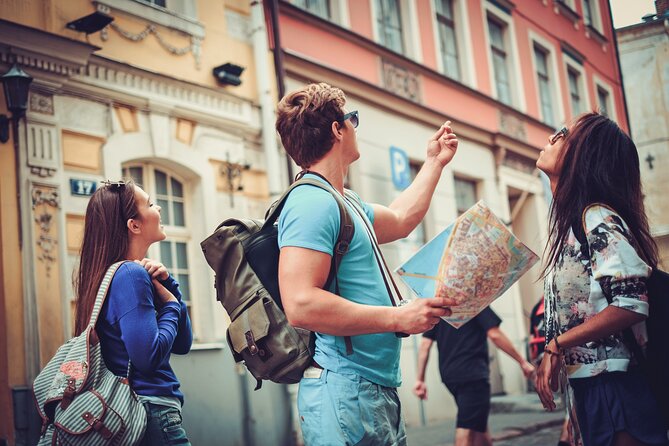
This tour starts at the Museum of the Second World War, right at plac Władysława Bartoszewskiego 1 in Gdańsk. You meet your guide in front of the museum, and the first step is basically getting oriented—where to enter, how long you’ll need, and how you’ll move through the exhibition.
That orientation matters because the museum is built to pull you through a structured route. If you go in cold, you can still enjoy it, but you may spend extra time figuring out what you’re looking at. With a guide, you get a sense of why each section comes when it does—so the museum doesn’t just feel like a list of horrors. It becomes a timeline with cause-and-effect.
One more practical note: the museum is at street level, but key parts of the exhibition go down to lower areas. The good news is there are lifts for access, so you’re not forced into stairs-only routes.
More Westerplatte and Museum of the Second World War tours from Gdansk



Inside the museum: how the exhibition keeps the story understandable
The main exhibition is arranged on both sides of a long corridor axis, with about 20 rooms that form a continuous narrative. The corridor itself plays an important role: it’s where everyday life is shown in context. That’s a smart design choice. It prevents the story from turning into only strategy and slogans.
You start with background—how the war’s conditions grew across Europe. A semi-circular screen introduces the rise of totalitarian regimes, and the sequence afterwards is described as meticulously researched and presented. That word matters. In museums like this, clarity is not guaranteed; here, it’s part of the build.
I also like how the timeline doesn’t treat Poland as a footnote. The story is explained across three layers:
- political decisions and shifting borders
- military developments and systems
- personal stories that show what those decisions meant for individuals
That mix is where the tour earns its keep. If you only want war history, you’ll get it. If you also want a human understanding of how people got trapped in it, the structure pushes you there.
The long corridor and daily life details that change how you read everything
A standout part is the museum’s emphasis on everyday wartime life. The corridor axis isn’t just decoration. It’s a guide through the war as lived experience, so when you later see objects and scenes of violence, your brain already understands the “before” and the “during.”
This is where the museum can feel more powerful than a typical battlefield-only approach. When everyday life is shown in the same route as major political events, you stop thinking of WWII as something that happened far away. You start connecting the dots: shortages, propaganda, fear, and the shrinking choices people had.
If you’re the type who hates being overwhelmed, you’ll still find ways to reset. The route is organized. You’re not randomly thrown into a new topic every five minutes. The museum moves like a classroom lesson that’s heavy, but controlled.
Gdańsk’s specific backstory: from World War I to a political limbo
The tour doesn’t jump straight to 1939 and call it a day. You begin by learning why places like Danzig (Gdańsk) were vulnerable in the first place.
The museum links the situation in Danzig to the end of World War I and the Treaty of Versailles. That treaty left the city in what’s described as a political limbo—governed neither by the newly recreated Poland nor by Germany, even though Germany had governed the region for a long stretch before.
That context is crucial if you want to understand why the city’s story becomes one more chapter in European conflict rather than an isolated local tragedy. It also makes later sections easier to follow, because you already know what kind of instability the city lived with.
In plain terms: the guide helps you see how borders, treaties, and power struggles created conditions where extremist forces could gain control.
The objects that teach: Enigma, Stalin’s pipe, Sherman tank, and more
One reason this museum works so well is that it doesn’t rely only on text and photos. It uses objects to explain systems.
You’ll see examples ranging from Stalin’s pipe to a Sherman tank, and there’s even mention of the Enigma machine. That range matters because it shows different sides of the WWII machine: leadership, intelligence, technology, and military capability.
Objects like these do something a photo can’t. They force your brain to picture material culture—tools and items that people handled, not just images that memorialize suffering after the fact. It turns the story from an abstract “war happened” into “people used specific mechanisms to make the war possible.”
And because you’re on a guided route, you’re less likely to skip what you’re looking at. Your guide’s job is to connect the dots fast, so you’re not left guessing what something means or why it’s there.
More Gdansk museum visits, from the Shipyard to the amber halls
- Gdansk: Private Communism Tour with Solidarity Center Museum
★ 5.0 · 28 reviews - Gdansk Private Communism Tour with Solidarity Center Museum
★ 5.0 · 14 reviews - Stutthof Concentration Camp and Museum of WWII: Private Tour
★ 4.7 · 3 reviews
Audio, video, and pacing: the tools that help you stay with the story

A real practical plus is the audio support. The museum provides headphones at the desk, and the audio guide can help you translate as you go. One review also highlighted that the audio system is easy to use and that you still have time to read displays and look at artifacts.
This is a great setup for different learning styles:
- If you like visuals, you can watch video clips and footage while using audio as a guide.
- If you like reading, you can pause on text and not feel completely lost without audio.
- If translation is your priority, headphones let you keep moving without stopping every few feet.
Now, the consideration: the museum is intense and there can be a lot of repeated themes. That repetition isn’t always bad—some points need emphasis—but you may find it fatiguing if you rush.
So my advice is simple: start slow. Let the first rooms set your context. Then decide whether you want to skim later sections or sit with them. If you try to do everything at speed, you’ll end up carrying the same information in your head without processing it.
Timing, route length, and where the museum lets you recharge
This tour is about three hours, with the guided portion of the main exhibition running close to 2 hours 50 minutes. That’s not a small commitment, and it’s also not meant to be a quick photo stop.
To make it easier, plan a rhythm:
- focus on the big story beats early
- use audio when you need translation support
- stop occasionally when a personal fate or object hits you emotionally
- take a break if your brain starts skating over details
One review also mentioned there’s a manned cloakroom and a café inside. That’s useful if you want to store coats and reset before you continue. Even if you don’t linger for food, the ability to regroup helps keep the experience from turning into nonstop overload.
Price and value: when $217.08 makes sense

The tour price is $217.08 per person for a private guided experience. That sounds high if you compare it to solo ticket prices, but the value comes from what you’re paying for:
- a licensed guide fluent in English
- a guided retelling of WWII events, specifically with commentary about the war in Poland
- museum tickets included
- an exclusive experience tailored to your needs and interests
- the private setup (only your group participates)
If you’re the kind of traveler who likes museums when they’re explained—especially political and historical museums—this can be worth it. The guide isn’t just walking you through rooms. They’re helping you connect the “why” and the “so what.”
If you’re a confident self-guided museum visitor who already knows the WWII basics, you might not need the guide as much. But if your goal is a clear Poland-centered understanding of how the war unfolded, the guided format is where the price starts to feel justified.
Who this tour fits best (and who should think twice)
This tour fits best if:
- you want a structured, guided WWII narrative instead of wandering
- you care about how WWII affected Poland and the region
- you prefer visual storytelling backed by expert explanation
- you can handle serious subject matter without needing light entertainment
It may not be your best match if you’re looking for something short and breezy. The museum is designed to show the horror in detail, including scenes and language meant to name what happened.
That said, if you’re willing to give it time and emotional bandwidth, it’s also the kind of visit that stays with you—because it teaches you how the war worked and how it landed on ordinary lives.
Should you book this Gdańsk WWII museum tour?
Book it if you want a guided route that makes the museum’s structure click: the corridor, the 20-room story flow, and the objects that explain systems behind the suffering. The combination of expert commentary and museum tickets is a practical way to avoid the most common problem with museums like this: getting lost in the details without understanding the overall message.
Don’t book it if you’re only in Gdańsk for a quick stop and you know you’ll struggle with long, heavy exhibitions. This is a serious museum experience, and it asks you to slow down.
If you want my “best call” rule: if you can spare three hours and you’re ready to understand the WWII story as it affected Poland and Europe, this is an excellent way to do it.
FAQ
What is the meeting point for the tour?
You meet at the Museum of the Second World War, plac Władysława Bartoszewskiego 1, 80-862 Gdańsk, Poland. The tour ends back at the same meeting point.
How long does the tour last?
The duration is about 3 hours (approx.), with the main exhibition visit running close to 2 hours 50 minutes.
Is the tour private?
Yes. It’s a private tour/activity, and only your group participates.
Is the museum ticket included?
Yes. Tickets to the Museum of World War II are included in the tour.
What language is the tour offered in?
The tour is offered in English (the guide is fluent in the selected language).
Is hotel pickup included?
No. Hotel pickup and drop-off are not included. Transportation can be arranged upon request for an additional fee of 20 Euro.
Are there audio headphones or translation support available?
The museum offers headphones at the desk for translation. Reviews also mention that an audio headset is easy to use.
Is admission sometimes free?
Admission can be free on certain days, including Tuesdays, based on information from reviews.
More Gdansk Museums & Amber Halls
- Gdansk: Private Communism Tour with Solidarity Center Museum★ 5.0 · 28 reviews
- Museum of the Second World War Gdansk Private Tour & Tickets★ 5.0 · 24 reviews
- Gdansk Private WWII Tour with Museum of the Second World War★ 4.9 · 22 reviews
- Gdansk Private Communism Tour with Solidarity Center Museum★ 5.0 · 14 reviews
- Stutthof Concentration Camp and Museum of WWII: Private Tour★ 4.7 · 3 reviews
More Tour Reviews in Gdansk
- Gdańsk City Sights & History Guided Walking Tour in English★ 4.8 · 876 reviews
- Gdansk: Firearm Shooting Experience with Instructor★ 4.8 · 866 reviews
- Gdansk: Guided Round-Trip Cruise to Westerplatte★ 4.3 · 865 reviews
- Gdańsk: Sightseeing EcoCruise around the Old Town of Gdansk★ 4.6 · 719 reviews
- Main Town Gdańsk Walking Tour★ 5.0 · 644 reviews
More Westerplatte & WWII Museum Tours
- Gdansk: Guided Round-Trip Cruise to Westerplatte★ 4.3 · 865 reviews
- Malbork Castle and Westerplatte Tour with Lunch★ 5.0 · 27 reviews
- Museum of the Second World War Gdansk Private Tour & Tickets★ 5.0 · 24 reviews
- Gdansk Private WWII Tour with Museum of the Second World War★ 4.9 · 22 reviews
- Gdansk: Malbork Castle & Westerplatte Tour with Local Lunch★ 5.0 · 12 reviews
Still deciding? Here are more Gdansk tours and Pomerania day trips we have written up


Westerplatte & Museum of WWII Tours, compared.
 ★ 4.3Guided Round-Trip Cruise to WesterplatteFrom $33865 reviews
 ★ 5.0Malbork Castle and Westerplatte Tour with LunchFrom $28927 reviews
 ★ 5.0Museum of the Second World War Gdansk Private Tour & TicketsFrom $15324 reviews
 ★ 4.9Gdansk Private WWII Tour with Museum of the Second World WarFrom $15322 reviews
 ★ 5.0Private WW2 Tour of Westerplatte,Gdansk and Stutthof Including LunchFrom $25512 reviews
 ★ 5.0Malbork Castle & Westerplatte Tour with Local LunchFrom $34912 reviews
 ★ 5.0World War II TourFrom $19510 reviews
 ★ 5.0Westerplatte private tour led by Expert-Guide (door to door)From $725 reviews
Browse the lists this tour appears in