
Reviewed · SOLIDARITY, COMMUNISM & RECENT HISTORY
Solidarity Tour
Solidarity in Gdansk hits harder than expected. This private tour ties together the European Solidarity Center plus key sites around the shipyard so the story of Poland pushing back on communism makes sense fast. You get an English-speaking local guide, and the pacing is built for real understanding, not just check-the-box sightseeing.
I love the way it uses the museum to explain the people behind the movement, not only dates. I also like the shift from the formal museum setting to places like Sala BHP and the working shipyard zone, which keeps it grounded in how it actually felt. One consideration: the core museum stop takes 2 hours, so it’s thoughtful and emotional, and you’ll want comfortable shoes for the outdoor parts.
In This Review
- Key highlights at a glance
- Why the Solidarity story belongs in Gdansk
- Meeting at Plac Solidarności and how the 3-hour flow works
- European Solidarity Center: where the struggle for free Poland becomes clear
- Sala BHP and the Gdańsk Agreement signing moment
- Gdańsk Shipyard: Lenin Gates, docks, and the old-to-new shift
- The guide matters: Bozena and Sebastian’s teaching style
- What’s included, what isn’t, and what to bring
- Price and value: what $114.45 per person buys you
- Who this tour suits best in Gdansk
- Should you book this Solidarity Tour in Gdansk?
- FAQ
- How long is the Solidarity Tour?
- Where does the tour start?
- Is the tour guided in English?
- What’s included in the price?
- Is admission to the European Solidarity Center included?
- Do I need to pay admission for Sala BHP and the shipyard area?
- Is alcohol included?
- Is the tour private?
- Does it run in all weather?
- What fitness level do I need?
- Where does the tour end?
Key highlights at a glance
- European Solidarity Center admission included for the heart of the story
- Sala BHP and the Gdańsk Agreement connection tied to Lech Wałęsa
- Lenin Gates plus former docks and old warehouses, away from the busiest tourist lanes
- Small comfort touches like beverages included, with alcohol available to purchase
- Private group format in all weather, about 3 hours total
Why the Solidarity story belongs in Gdansk
Gdansk is not just pretty canals and amber shops here. It’s a city where politics moved through factories, paperwork, and public courage. The Solidarity movement started in a very specific place and mood, and this tour keeps that focus instead of spreading out into random landmarks.
You’ll also notice something important: the story isn’t only about Poland. Solidarity became a model and a warning signal across Europe. On this tour, you’ll see why the struggle for a freer Poland matters beyond one country.
And because it’s guided, you won’t be guessing what you’re looking at. You’ll leave with a clearer timeline and, more importantly, a sense of why ordinary people took risky steps.
More Solidarity and communist-era history tours in Gdansk

Meeting at Plac Solidarności and how the 3-hour flow works
The tour starts at Europejskie Centrum Solidarności on Plac Solidarności 1. That’s a smart choice because it puts you at the center of the narrative right away. From there, you’ll move site to site without long gaps where you’re just waiting for the next stop.
Timing is tight but not rushed: the museum takes about 2 hours, Sala BHP is a quick 20 minutes, and the shipyard area visit runs around 40 minutes. That means you get depth where it counts and just enough time outside to notice the atmosphere.
You’ll want moderate physical fitness, mainly because you’ll be out around the shipyard area and walking between points. It operates in all weather, so dress for rain, wind, or sun—Gdansk can be moody.
European Solidarity Center: where the struggle for free Poland becomes clear
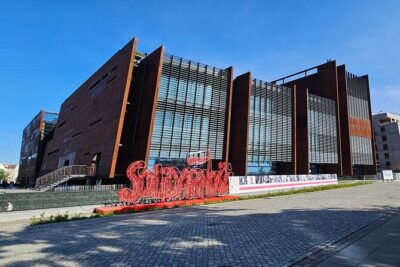
This is the anchor stop: Europejskie Centrum Solidarności. You’ll spend about 2 hours inside, and admission is included in the price. If you only do one thing to understand Solidarity in Gdansk, make it this.
The museum is focused on the struggle for free Poland and how people coped during the uneasy years of communism. That focus matters because it explains the movement in human terms—how pressure shaped daily life and how organizing became a form of resistance.
A practical tip: give yourself mental space during the museum portion. This isn’t a quick highlights gallery. Plan to read, listen, and let the guide connect the dots. If you’re someone who likes stories with real context, you’ll appreciate the structure.
What you’ll walk away with is not only a sense of what happened, but also why it happened. That background then makes Sala BHP and the shipyard area far more meaningful when you see them with new understanding.
Sala BHP and the Gdańsk Agreement signing moment
Next comes Sala BHP, a place with heavy historical weight. It’s on the route for about 20 minutes, and you won’t pay admission since it’s free.
This stop is tied to one standout event: Lech Wałęsa signing the Gdańsk Agreement with the contemporary authorities of the People’s Republic of Poland. Even if you’ve heard the name Wałęsa, this is where the story gets a concrete, place-based anchor.
What I like about including Sala BHP is the contrast. The museum gives you a broad explanation; Sala BHP gives you a specific moment. It helps you understand Solidarity as both a public movement and a negotiation that shifted power.
The drawback, if you’re expecting a long stop here, is time. You only get 20 minutes, so arrive ready to absorb rather than to roam.
Gdańsk Shipyard: Lenin Gates, docks, and the old-to-new shift
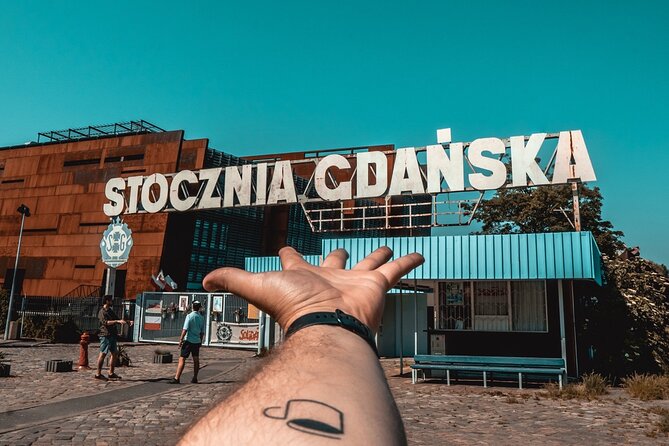
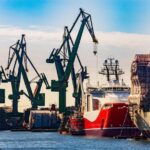
The final site is the Gdańsk Shipyard area. You’ll spend about 40 minutes walking through the former shipyard zone, and admission is free.
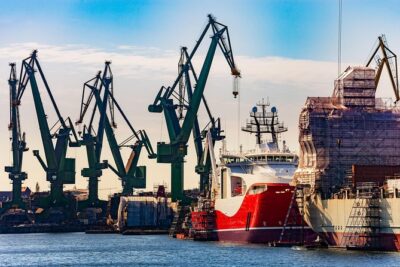
What makes this stop special is that it’s not staged like a theme park. You’re moving through a space that still matters. The shipyard is still functioning, but it’s changing before your eyes—new entertainment centers, galleries, and clubs are appearing where older industrial life once dominated.
You’ll also see the less touristy parts of the city, including docks and old warehouses. That matters because the shipyard story is tied to work, not polish. It’s easier to understand Solidarity when you’re standing near the physical geography where labor and pressure gathered.
One highlight mentioned for this day is seeing top landmarks in the shipyard area, including Lenin Gates. Even if you’ve only seen photos online, the scale and tone of the place land differently in person—because it was built for industry, not for visitors.
If the weather is rough, this is the stop where you’ll notice it most. Bring a jacket you can actually move in, and expect some outdoor walking.
- Gdańsk City Sights & History Guided Walking Tour in English
★ 4.8 · 876 reviews - Gdansk: Firearm Shooting Experience with Instructor
★ 4.8 · 866 reviews - Gdansk: Guided Round-Trip Cruise to Westerplatte
★ 4.3 · 865 reviews - Gdańsk: Sightseeing EcoCruise around the Old Town of Gdansk
★ 4.6 · 719 reviews
The guide matters: Bozena and Sebastian’s teaching style
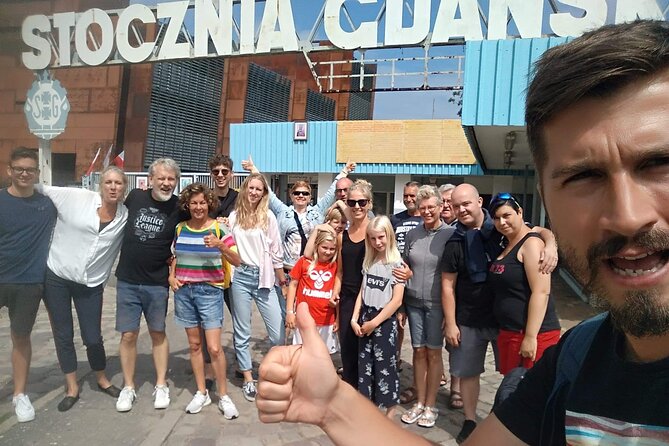
The biggest difference between an average tour and a memorable one is the guide’s ability to connect facts to meaning. In this case, the experience is guided by Poland By Locals with an English-speaking leader, and the most praised guides—Bozena and Sebastian—are known for being energetic and very personal with their explanations.
You’ll likely get more than a script. A good guide here doesn’t just point out buildings; they explain who was involved, what choices were made, and how those choices rippled outward. That’s how you stop treating Solidarity as a distant European trivia topic.
This tour also includes time for questions. If something feels confusing—like how negotiations worked, or how Poland’s events influenced other places—asking helps you fill in gaps immediately instead of leaving with half-formed ideas.
If you like history that feels lived-in, not textbook dry, this is the type of guiding approach that makes a difference.
What’s included, what isn’t, and what to bring
This tour includes beverages and a local guide. The museum admission to the European Solidarity Center is included, while Sala BHP and the shipyard area don’t require admission fees for your visit.
Alcoholic drinks are not included, though you can purchase them if available at or near the stops. So think of beverages as a practical comfort, not a party add-on.
You’ll want to bring:
- Comfortable walking shoes (especially for the shipyard area)
- A weather-ready layer (because it runs in all conditions)
- A charged phone for your mobile ticket, if your ticket is delivered that way
Because the tour is private to your group, you won’t have the distraction of strangers matching your pace. That’s good if you want smoother conversation and faster clarifying answers.
Price and value: what $114.45 per person buys you
The price is $114.45 per person for about 3 hours. On its own, that can sound steep until you look at what you actually get.
First, admission to the European Solidarity Center is included. Museums in Europe can easily eat up a big chunk of your daily spend, so bundling entry into the tour is a real value point. Second, you’re also getting a trained local guide for the full run—museum plus two additional key sites—so you’re not paying for only a single stop.
Third, beverages included remove a small cost and a small hassle. And there are group discounts mentioned for this experience, which can make it easier to justify if you’re traveling with others.
The only real “cost” to consider is the emotional weight of the subject matter. Solidarity history is meaningful and sometimes heavy. If you’re looking for a purely light day, you might find this more intense than a standard city stroll.
Who this tour suits best in Gdansk
This is a great fit if you care about real context. If you want to understand how Solidarity became a force for change, you’ll appreciate the structure: museum first, then the signature historical site at Sala BHP, then the shipyard environment where it all started to take shape.
It also works well if you’re the type of traveler who likes to ask questions. Short stops like Sala BHP benefit from an attentive guide because you need just enough explanation to make each minute count.
If you’re traveling with friends or family, the private format means the pace can feel more tailored. And because the experience operates in all weather, you’re less likely to lose the day to rain.
The moderate physical fitness requirement suggests it’s not for brand-new mobility challenges, but it’s generally manageable for most travelers who can walk around town and handle some outdoor time.
Should you book this Solidarity Tour in Gdansk?
Book it if you want one day that actually connects the dots. This tour gives you the museum context at Europejskie Centrum Solidarności, then anchors the story at Sala BHP with the Gdańsk Agreement moment tied to Lech Wałęsa, then brings it back to the real geography of the shipyard—including docks, old warehouses, and the Lenin Gates area.
Skip it if you want a relaxed sightseeing loop with minimal emotion and minimal reading. The 2-hour museum stop is a commitment, and the topic is serious by nature.
My practical call: if you’re even a little curious about how Solidarity shaped Poland and spread beyond it, this is one of the most direct, efficient ways to understand Gdansk’s role. The price makes more sense when you factor in the included museum admission, the guided storytelling, and the fact that you’re covering multiple key sites in one focused 3-hour window.
FAQ
How long is the Solidarity Tour?
It runs for about 3 hours.
Where does the tour start?
The meeting point is Europejskie Centrum Solidarności, Plac Solidarności 1, 80-863 Gdańsk, Poland.
Is the tour guided in English?
Yes, it’s offered in English.
What’s included in the price?
The tour includes beverages, a local guide, and admission ticket to the European Solidarity Center.
Is admission to the European Solidarity Center included?
Yes, the admission ticket for the European Solidarity Center is included.
Do I need to pay admission for Sala BHP and the shipyard area?
No. Sala BHP is free, and the shipyard area stops are free as well.
Is alcohol included?
No. Alcoholic drinks are not included, though you can purchase them.
Is the tour private?
Yes. It’s a private tour/activity, and only your group participates.
Does it run in all weather?
Yes, it operates in all weather conditions, so dress appropriately.
What fitness level do I need?
You should have a moderate physical fitness level.
Where does the tour end?
The activity ends back at the meeting point.
More Tour Reviews in Gdansk
- Gdańsk City Sights & History Guided Walking Tour in English★ 4.8 · 876 reviews
- Gdansk: Firearm Shooting Experience with Instructor★ 4.8 · 866 reviews
- Gdansk: Guided Round-Trip Cruise to Westerplatte★ 4.3 · 865 reviews
- Gdańsk: Sightseeing EcoCruise around the Old Town of Gdansk★ 4.6 · 719 reviews
- Main Town Gdańsk Walking Tour★ 5.0 · 644 reviews
More Solidarity & Communist-Era History Tours
- Gdansk: Private Communism Tour with Solidarity Center Museum★ 5.0 · 28 reviews
- Gdansk Private Communism Tour with Solidarity Center Museum★ 5.0 · 14 reviews
- Gdansk: European Solidarity Centre Guided Tour★ 4.9 · 14 reviews
- Gdansk European Solidarity Centre Guided Tour★ 5.0 · 6 reviews
Still deciding? Here are more Gdansk tours and Pomerania day trips we have written up


Solidarity, Communism & Recent History, compared.
 ★ 5.0Private Communism Tour with Solidarity Center MuseumFrom $18428 reviews
 ★ 4.9European Solidarity Centre Guided TourFrom $8314 reviews
★ 5.0Gdansk Private Communism Tour with Solidarity Center MuseumFrom $13914 reviews
★ 5.0Gdansk European Solidarity Centre Guided TourFrom $396 reviews
★ 4.9European Solidarity Centre Guided TourFrom $8314 reviews
★ 5.0Gdansk Private Communism Tour with Solidarity Center MuseumFrom $13914 reviews
★ 5.0Gdansk European Solidarity Centre Guided TourFrom $396 reviews
Browse the lists this tour appears in