
Reviewed · GDANSK GOLF CART & BUGGY SIGHTSEEING
Gdansk: 2H City Sightseeing Tour LIVE GUIDED by Buggy/Golf cart
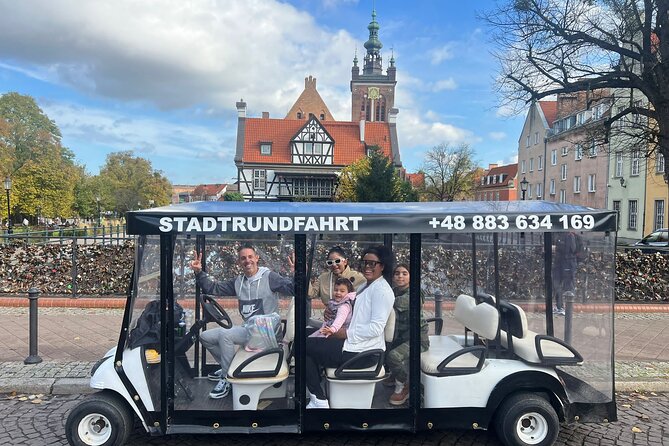
Gdańsk clicks into place fast on a buggy. This electric golf cart tour is a time-saver because you can cover big distances without wearing out your feet, and I really liked the free drink that keeps the outing easy. The trade-off is that most stops are short, so it is more about orientation and seeing key sights than doing long museum deep-diving.
If you’re doing Gdańsk for the first time, this is the kind of tour that helps you choose what to return to. The route focuses on the historic center plus the shipyard and Solidarity sites, and it runs with a live guide in English with a small-group feel (up to 30 people).
In This Review
- What makes this tour worth your time
- First impressions: the buggy format in Gdańsk Old Town
- Price and what you actually get for it
- Meeting point and pickup within 2 km of Neptune’s Fountain
- The Old Town highlights run: Neptune’s Fountain to the main squares
- Gates, mills, and the city’s changing faces
- St. Bridget’s and the Amber altar: the interior moment that matters
- Solidarity era stops: post office defense, memory centers, and shipyard context
- WWII Museum, Philharmonic area, and the waterfront icons near the end
- How long stops really feel (and how to make it better)
- Guides, language, and the human touch
- Should you book the Gdańsk buggy tour?
- FAQ
- How long is the Gdańsk buggy city sightseeing tour?
- What is the price per person?
- Is the tour guided, and what language is it offered in?
- Where does the tour start and end?
- Is pickup available?
- What should I know about the meeting time?
- What drink is included?
- Are there any admission fees during the tour?
- What if the weather is bad?
- Is free cancellation available?
- What is the group size limit?
- Are service animals allowed?
What makes this tour worth your time
- Electric golf cart speed: you ride between sights instead of spending your whole trip walking
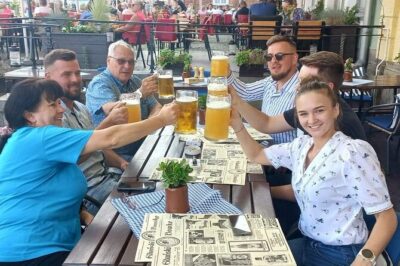
- Included drink: bottled water, coffee, or beer keeps the tour comfortable
- A route built for first-timers: you get both Old Town icons and the Solidarity/shipyard story
- Short, efficient stops: great for photos and for deciding what to explore later
- Central meeting point at Neptune’s Fountain: easy to understand where to start
- Multiple named city landmarks: gates, churches, halls, stations, and major memorial sites in one loop
First impressions: the buggy format in Gdańsk Old Town
Gdańsk is compact, but it still adds up—cobblestones, bridges, and a lot of walking if you try to do everything on your own. This is why the golf-cart setup feels smart. You get around quickly through the historic core and along the river areas without needing full stamina.
It is also an easy way to handle mixed travel days. Maybe your feet are tired from beach time. Maybe you’re traveling with someone who does not want a long uphill slog. The cart lets you keep the pace moving while still seeing the city’s big landmarks up close.
One more practical note: the tour is about 2 hours to 2 hours 15 minutes. That is enough time to get your bearings and learn the main storyline, but it is not enough to thoroughly explore every interior stop. If you want lots of museum time, plan extra time after the tour.
More Gdansk golf cart and buggy sightseeing spins



Price and what you actually get for it
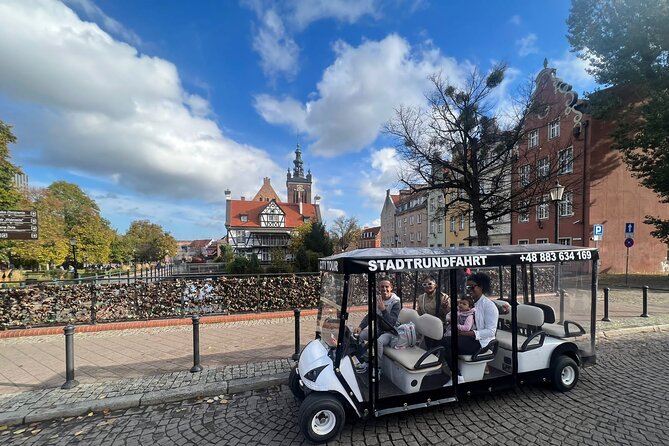
At $51.97 per person for roughly two hours, the value comes from three things working together: transportation, a live guide, and entry support where it matters.
- You are not paying just for a guide. You are also paying for the electric buggy ride that replaces a big chunk of walking.
- You are not paying just for sightseeing. You are getting context at many stops, including Solidarity and WWII-era remembrance areas.
- You get at least one interior highlight with admission included: the famous Amber altar at St. Bridget’s Church.
You also get a welcome drink for each person. It may sound like a small perk, but it changes the feel of the tour—especially in cooler months or if you arrive a bit rushed.
Meeting point and pickup within 2 km of Neptune’s Fountain
The standard start is right at Neptune’s Fountain (Fontanna Neptuna) on Długi Targ, and you end back at that same meeting point unless you request a different drop-off.
Pickup is offered within a 2 km radius from Neptune’s Fountain. You can give an address in the historical city center (including hotels or where you’re staying), and the guide will come for you. Do show up early: you should wait at your pickup spot about 10 minutes before the scheduled start.
Two logistics points you should know:
- Pickup is not offered at the ports.
- Some streets can have restrictions. If your chosen address is in a restricted area, you’ll coordinate a nearby pickup point.
Also, plan for occasional minor delays due to road traffic. It is city driving, not a runway.
The Old Town highlights run: Neptune’s Fountain to the main squares
Your route begins with the icon everybody recognizes: Neptune’s Fountain. This is the postcard moment of Gdańsk, and the tour uses it as a grounding point for the city’s seafaring identity—Neptune is tied to the maritime feel of the place.
From there, you move into the historic civic core:
- You pass the Main Town Hall / Museum of Gdańsk, a reconstructed 14th-century building that helps explain how the city rebuilt after WWII.
- Nearby is Arthur’s Court (Muzeum Gdańska), which points you toward the city’s merchant past and how commercial spaces evolved over time.
- Then comes the star square: Długa Targ (Long Market Square). This is where the scale of the historic center becomes obvious, even during a quick stop.
After the squares, the tour leans into architecture and city gates:
- The Green Gate (Brama Zielona) is a Renaissance landmark you’ll spot easily.
- The Gdańsk Shakespeare Theatre gets attention not just for its setting, but for a genuinely unusual detail: it has a folding roof.
- Katownia, the Old Prison Tower, connects the city to darker civic history, with the coal-market reference adding extra flavor to the story.
- Langgasser Tor (Golden Gate) shows how royal routes once entered the representative street system.
You also get the Highland Gate, which marks the start of the Royal Road conceptually and functions as a tourist-info point today.
Gates, mills, and the city’s changing faces
After the main gates and squares, you roll past more landmarks that reveal different eras of Gdańsk.
- The Great Armoury (Wielka Zbrojownia) is highlighted for its striking style (Dutch Mannerism). It also explains how the building’s role shifted into modern education (it belongs to the city’s art academy now).
- The Millennium Tree (Trzewko Tysiąclecia) is a more modern monument—polished stainless steel—used as a reminder that the city keeps commemorating itself long after the medieval era.
- You also stop at the Jan III Sobieski Monument, tying Gdańsk into broader Polish history.
Then you encounter a major transport landmark: Gdańsk Główny Railway Station, opened in 1900. Even if you are not taking a train, seeing it in the tour helps you understand how the city grew beyond medieval boundaries.
On the church side, you get a quick sampler of what Gdańsk does best: distinctive brick-and-stone landmarks rebuilt through war and time.
- St. Joseph’s Church (15th century, rebuilt after WWII)
- Church of St. Elizabeth (with the WWII damage and 1947–1949 reconstruction story)
- St. Catherine’s Church (noted as the oldest church in Gdańsk and tied to a Protestant-to-Catholic shift after 1945)
- St. Bridget’s Church (rebuilt after major destruction; this is where the standout included interior moment comes)
Two additional civic buildings you pass:
- Ratusz Starego Miasta (Old Town Hall), mentioned as surviving war damage.
- The Great Mill, once the greatest industrial plant of Medieval Europe, now hosting an amber museum.
These stops can feel like fast pinpoints on a map. That is the point. The tour is giving you a mental layout so you know where you want to go back next.
More Gdansk scavenger hunts and Main Town city games
- Undercover City Games: Gdansk
★ 5.0 · 198 reviews - Hevelius Treasure | Scavenger Hunt
★ 5.0 · 76 reviews - Undercover City Games: Gdynia
★ 5.0 · 34 reviews - City Game Tour Gdańsk
★ 5.0 · 19 reviews
St. Bridget’s and the Amber altar: the interior moment that matters
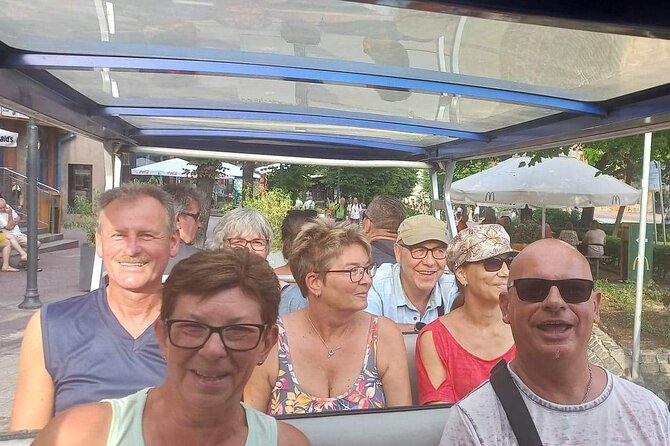
If you only care about one interior, this is the one the tour makes time for.
At St. Bridget’s Church, the highlight is the Amber altar, which the tour frames as exceptionally large and visually intense—so much so that it is described as stunning to people regardless of faith or background. Admission here is included, and the stop is longer than most others (about 15 minutes).
This is also a good moment to slow down mentally. The rest of the ride is built for movement and orientation. The Amber altar is where you can actually sit with something and let it land.
Practical tip: if you love photography, this church stop is your best chance for it during the tour. Outside stops are often quick, but here you have more time to look, adjust, and actually see.
Solidarity era stops: post office defense, memory centers, and shipyard context
The tour pivots from architectural sightseeing to modern history. You still move by cart, but the emotional tone changes because the places are tied to WWII and the Solidarity movement.
You visit:
- Museum of the Polish Post Office: connected to the defense of the post office on September 1, 1939, one of the first acts of WWII in Europe. The stop also points you to a monument for the defenders.
- European Solidarity Centre (often called the Solidarity Museum): a modern cultural institution meant to preserve memory of Solidarity’s victory.
Then the route hits memorial forms:
- Three Crosses Monument, a monument with three crosses and anchors tied to the victims of the December 1970 events. It sits by Solidarity Square near the historic Number 2 gate to the shipyard area.
- Sala BHP, associated with events like the August strike and the agreements signed in 1980 linked to Lech Wałęsa.
- Gdańsk Shipyard, the famous site where Solidarity emerged in September 1980.
Even if you already know some Polish history, it lands differently when you can see how the city’s geography connects to the events. You are not just reading dates. You are standing in the spaces that framed them.
And a small point that helps: some guides add personal perspective. In the reviews, I saw names like Michael and Maciej mentioned for bringing historical stories to life with firsthand family experiences from Nazi and Soviet eras. If you get a guide with that kind of background, the modern history stops feel more human.
WWII Museum, Philharmonic area, and the waterfront icons near the end
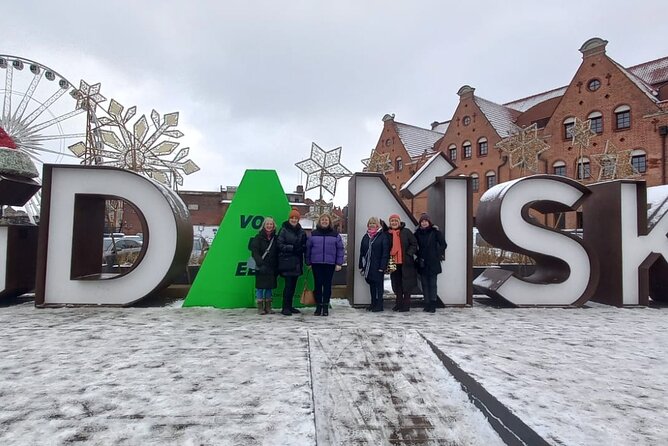
After the Solidarity core, you continue into major 20th-century and cultural stops.
- Museum of the Second World War: a state institution focused on WWII with exhibits opened in 2017. It is a strong stop if you want modern museum architecture and big narrative displays.
- Baltic Symphony Hall: housed in the rebuilt and extended former municipal power plant on the island of Ołowianka. It is the kind of building that tells you the city reuses and reshapes spaces.
- St. John’s Church: described as a unique Gothic church and a cultural center in one.
Then the tour reaches the river icons:
- The Great Crane, one of Gdańsk’s defining symbols on the Motława River, described as the largest medieval port crane in Europe.
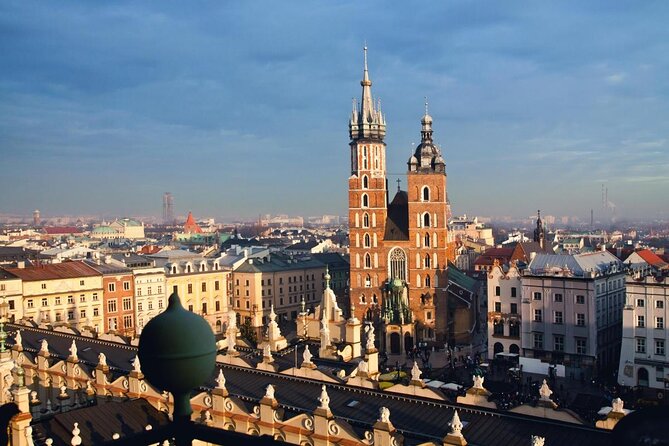
- St. Mary’s Church, singled out as the biggest Gothic brick building in the world.
- Royal Chapel (Kaplica Królewska), a Baroque landmark near St. Mary’s with a dome in the center of Gdańsk.
- St. Nicholas Church, an older Dominican church described as among the ones that survived WWII and stands in the main town area.
- Market Hall (Hala Targowa 1896), described as one of the oldest shopping centers in Gdańsk.
This final stretch is where the tour feels like a greatest-hits loop. Even with brief stop times, the skyline and brick-and-water setting make sense fast.
How long stops really feel (and how to make it better)
Because the tour time is fixed, the pacing is quick. Many stops are around one to a few minutes, with longer time reserved for places like the Amber altar.
So here is how to work with that reality:
- Pick 2–3 stops you care about most before you start. Then you know where to spend your camera time.
- Use the cart ride to ask questions during transit. The guide’s best explanations often happen between stops.
- If you want slower clarification, ask for it early. Some guides can speak fast, and accents can be strong depending on who you get. You’ll get the best results if you flag that you want repeats or slower pacing.
Also, if you’re doing this in autumn or cooler seasons, bring a layer. One review specifically flagged that the golf cart can feel chilly in autumn. Electric carts are quieter than buses, but they still do not trap heat like an indoor vehicle.
Guides, language, and the human touch
This tour is live-guided in English, and the guide factor matters a lot. In the reviews, names like Michael, Matchek, Maciej, Noris, and Mariana come up repeatedly for being enthusiastic, friendly, and full of stories.
That matters because the route covers everything from fountains and gates to shipyard history. A good guide helps you connect the dots, not just list landmarks.
A few small things I’d expect from a strong guide on this route:
- Clear explanations at each major landmark
- Willingness to answer questions
- Help with where to look for key details so you are not just taking random photos
If your guide takes group photos, that is a nice bonus. If they do not, it is totally fine to ask.
Should you book the Gdańsk buggy tour?
Book it if you want:
- A fast orientation to Gdańsk’s Old Town layout and major landmarks
- A guided storyline that includes both historic architecture and Solidarity/shipyard context
- An easier way to cover ground without exhausting walking energy
Skip it or pair it with a second plan if you want:
- Long museum visits at multiple sites during the same day
- Deep interior time at every church and hall (most stops are too short for that)
I think this tour shines as a first-time visit plan, especially if you’re on a tight schedule or even if you are arriving for a day. It helps you decide what to return to later, and it gives you enough local framing that your self-guided time feels less like wandering and more like exploring.
FAQ
How long is the Gdańsk buggy city sightseeing tour?
The tour runs about 2 hours to 2 hours 15 minutes.
What is the price per person?
The price is $51.97 per person.
Is the tour guided, and what language is it offered in?
It is a live guided tour, offered in English.
Where does the tour start and end?
It starts and ends at Neptune’s Fountain on Długi Targ in Gdańsk.
Is pickup available?
Yes, pickup is available within a 2 km radius from Neptune’s Fountain in the historical city center. Pickup is not offered at the ports.
What should I know about the meeting time?
You should wait at the pickup location about 10 minutes before the scheduled start time.
What drink is included?
A drink is included for each tourist and can be bottled water, coffee, or a beer.
Are there any admission fees during the tour?
All fees and taxes are included. Some stops list free admission, and admission to the Amber altar at St. Bridget’s Church is included.
What if the weather is bad?
This experience requires good weather. If it is canceled due to poor weather, you’ll be offered a different date or a full refund.
Is free cancellation available?
Yes, you can cancel up to 24 hours in advance for a full refund.
What is the group size limit?
The tour has a maximum of 30 travelers.
Are service animals allowed?
Yes, service animals are allowed.
More Tour Reviews in Gdansk
- Gdańsk City Sights & History Guided Walking Tour in English★ 4.8 · 876 reviews
- Gdansk: Firearm Shooting Experience with Instructor★ 4.8 · 866 reviews
- Gdansk: Guided Round-Trip Cruise to Westerplatte★ 4.3 · 865 reviews
- Gdańsk: Sightseeing EcoCruise around the Old Town of Gdansk★ 4.6 · 719 reviews
- Main Town Gdańsk Walking Tour★ 5.0 · 644 reviews
More Gdansk Scavenger Hunts & City Games
- Undercover City Games: Gdansk★ 5.0 · 198 reviews
- Hevelius Treasure | Scavenger Hunt★ 5.0 · 76 reviews
- Undercover City Games: Gdynia★ 5.0 · 34 reviews
- City Game Tour Gdańsk★ 5.0 · 19 reviews
- Private 2-Hour Tour with City Game in Gdańsk★ 5.0 · 15 reviews
More Gdansk Golf Cart & Buggy Spins
- Gdansk: City Sightseeing Tour by Golf Cart/Buggy Guided Tour★ 4.9 · 510 reviews
- Gdansk: Shared or Private City Tour Sightseeing By Golf Cart★ 4.8 · 233 reviews
- Gdańsk: City Sightseeing Tour by Buggy/Golf Cart LIVE GUIDED 1H★ 5.0 · 208 reviews
- Gdansk: Private Top City Tour by Electric Cart & Live Guided★ 4.9 · 114 reviews
- Gdańsk: City Tour by Electric Golf Cart★ 4.6 · 87 reviews
Still deciding? Here are more Gdansk tours and Pomerania day trips we have written up


Gdansk Golf Cart & Buggy Sightseeing, compared.
 ★ 4.9City Sightseeing Tour by Golf Cart/Buggy Guided TourFrom $40510 reviews
 ★ 4.8Shared or Private City Tour Sightseeing By Golf CartFrom $36233 reviews
 ★ 5.0City Sightseeing Tour by Buggy/Golf Cart LIVE GUIDED 1HFrom $29208 reviews
 ★ 4.9Private Top City Tour by Electric Cart & Live GuidedFrom $34114 reviews
 ★ 4.6City Tour by Electric Golf CartFrom $1987 reviews
 ★ 5.0GDANSK City Tour by Golf Cart Live Guide & City Sightseeing 90minFrom $3847 reviews
 ★ 4.6City Sightseeing Tour Eco Electric Buggy Golf Cart !From $2935 reviews
 ★ 4.9Gdansk Top Beer & Highlights Tour by Golf Cart/BuggyFrom $2419 reviews
Browse the lists this tour appears in