
Reviewed · GDANSK OLD TOWN & MAIN TOWN WALKING TOURS
Historic City Center Tour Gdansk in German
A walk in Gdansk that hits hard. This Historic City Center Tour in German strings together headline sights like the Golden Gate and St. Mary’s Church, plus the stories behind them. I especially liked how the guide ties buildings to the ideas of the local people of Gdańsk, not just dates. One thing to consider: the pace is fast and history-heavy, so if you freeze at timelines, take notes.
You’re getting a true old-town stroll—cobbled streets, tall, slender facades, and that late-medieval feel that makes you look up. The tour runs about 150 minutes, which is long enough to feel like you explored, but short enough not to cook your feet. Do wear warm layers; even with a good guide, winter cold is still winter cold.
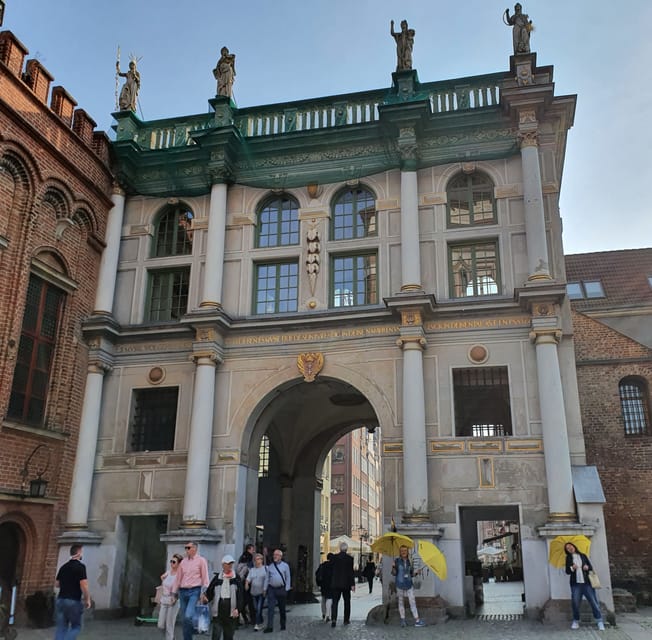
You meet at the Golden Gate and—this is useful—look for the yellow umbrellas. The tour runs rain or shine, and it’s wheelchair accessible, so you can plan around it without guessing. The guide language is German, and one guide I saw praised by name was Sandra, who made the cold weather feel less annoying.
In This Review
- Key points to know before you go
- A 150-minute German stroll through Gdansk’s historic core
- Golden Gate meeting point and the route’s first big moment
- St. Mary’s Church: seeing scale, then understanding why
- High Gate and civic landmarks: Right-town Town Hall and Arthur’s Court
- The crane: Europe’s largest medieval crane and the human muscle story
- Polish Post Office in the Free City of Gdańsk: communications through time
- Price and what $26 really buys you for 2.5 hours
- How the group tour works and why that matters
- Best for: history lovers who like their stories tied to buildings
- Should you book this Historic City Center Tour in German?
- FAQ
- FAQ
- What language is the live tour guide?
- Where do we meet for the tour?
- How long is the tour?
- Is hotel pickup included?
- Does the tour run in bad weather?
- Is the tour wheelchair accessible?
- Can I reserve now and pay later?
- What is the cancellation policy?
- Is this a private tour or a group tour?
Key points to know before you go
- Golden Gate as your starting anchor, right where the route makes sense.
- St. Mary’s Church, the largest brick church in the world, as the tour’s big visual stop.
- The crane, Europe’s largest medieval crane, moved by human muscle power.
- Right-town Town Hall and Arthur’s Court show how civic life shaped the city.
- Polish Post Office in the Free City of Gdańsk, for a historic communications thread through the center.
- German-language live guiding with a format that works well even in winter—bring layers.
A 150-minute German stroll through Gdansk’s historic core
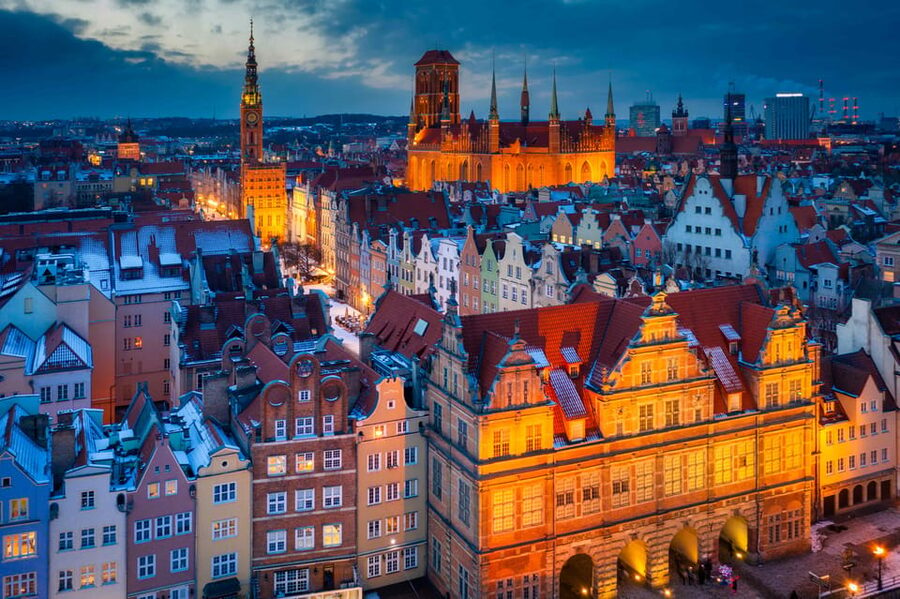
This tour is built for people who want the historic city center, not a museum marathon. In about 2.5 hours, you cover several named landmarks and connect them with the local stories that explain why these places mattered.
If you like architecture and civic history, you’ll feel at home here. You’ll get the kind of guidance that helps you read the city instead of just walking through it. The tour is also practical: it’s a walking tour with a live guide, and it doesn’t require you to plan transport between stops.
One reason I like this format is that it’s concentrated. Gdansk’s historic center is easy to enjoy on your own, but it’s also easy to miss the threads that make the sights click. This route gives you those threads quickly, in German, while you’re still standing in front of the buildings.
More walks through the Main Town and the Long Market in Gdansk




Golden Gate meeting point and the route’s first big moment
You start at the Golden Gate (Złota Brama). That’s more than a convenient address—it’s the kind of landmark that sets your brain in old-town mode immediately. When you arrive, look for the yellow umbrellas so you can spot your group fast and avoid wandering around waiting.
The early stretch is about getting your bearings. You’ll move along cobbled streets lined with elegant, slender buildings, and the tour gives you historical context as you go. It’s a good setup because once you’ve learned what you’re looking for, you spot details faster at the later stops.
The Golden Gate also works as a psychological cue: you’re not “discovering” one building—you’re entering a historic system of streets and institutions. That matters in a city where power and commerce changed hands over time.
Practical tip: bring a small thermos if you’re going in colder months. You’re outside for the full route, rain or shine, and you’ll appreciate the extra comfort before or after.
St. Mary’s Church: seeing scale, then understanding why
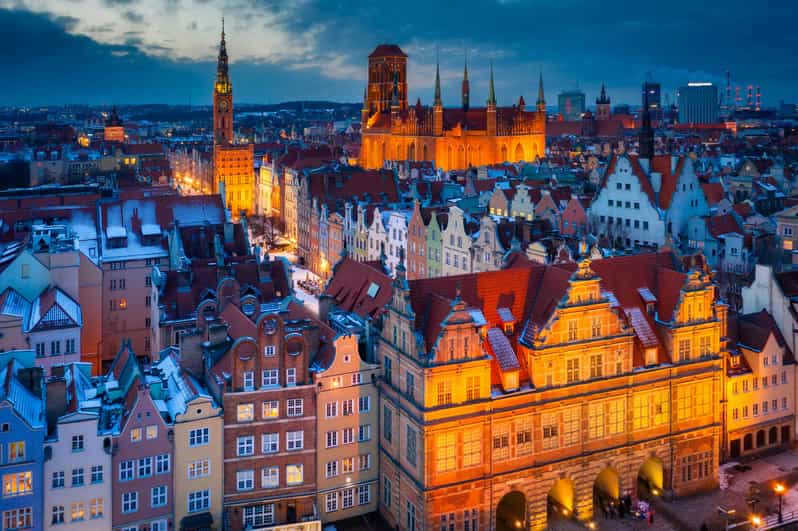
The tour’s headline stop is St. Mary’s Church—the largest brick church in the world. It’s one of those landmarks where just being there makes you do that silent thing: looking up, then stepping back to take in the scale.
What makes the guided part valuable is that St. Mary’s isn’t treated like a standalone postcard. You get stories that connect the church to the city’s life and how the community shaped it. Even if you don’t remember every detail, you’ll walk away understanding that this building reflects more than religion—it reflects civic identity and ambition.
There’s a balancing act here. A past participant noted that the guide can sometimes run long on church history, and that’s a real consideration. If you prefer a lighter explanation, you might want to focus on the big picture during the church stop, and save the deeper facts for your own reading afterward.
But if you enjoy a guided explanation in German while you’re inside the atmosphere of the old city, this is the kind of stop you’ll likely feel the most. St. Mary’s is visually unforgettable, and the tour helps you give that visual impression a meaning.
High Gate and civic landmarks: Right-town Town Hall and Arthur’s Court
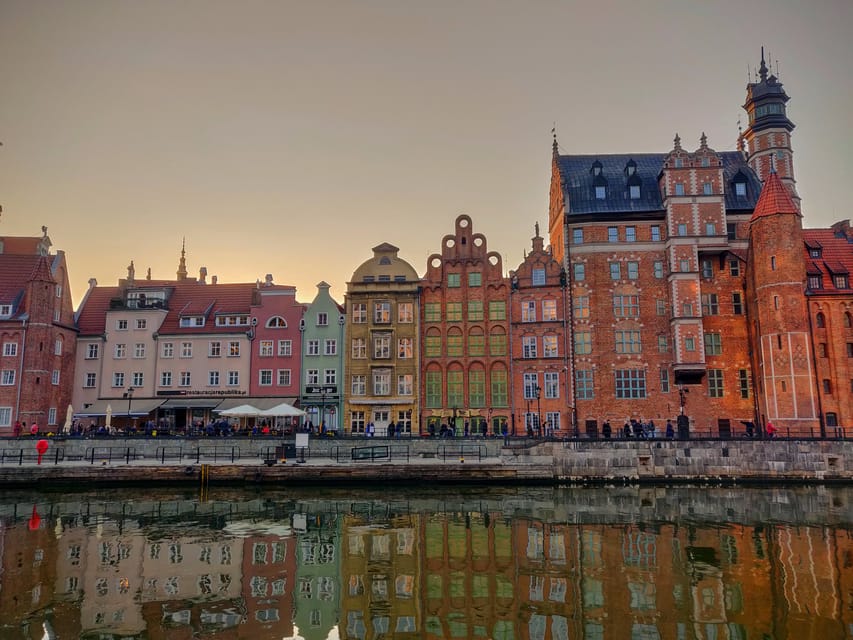
Between the big-ticket sights, the tour also spends time on civic landmarks—places that tell you how the city ran. You’ll visit spots including the High gate, the Right-town Town Hall, and Arthur’s Court.
Here’s what I like about those stops: they slow your thinking down. Instead of just admiring stonework, you start asking practical questions—who made decisions here, how were ideas exchanged, and what did it mean for everyday life? The guide frames the walk around those kinds of stories, which turns the center into something more than a scenic background.
The Right-town Town Hall is one of those “look at it, then notice it’s a whole world of governance” buildings. Town halls are powerful because they show where authority lived physically. During this tour, that point lands because you’re not only looking at the building—you’re receiving context for why it mattered.
Arthur’s Court is another named stop that adds variety to the route. Even if you’re not a specialist in old-city civic spaces, having it on the route helps break up the walk between mega-attractions. It keeps you engaged, especially if you’re trying to avoid information overload.
If you tend to get tired when tours turn into lectures, use a simple strategy: focus on one takeaway per stop. At the hall and Arthur’s Court, your takeaway could be how the city’s institutions shaped what you see on the street.
The crane: Europe’s largest medieval crane and the human muscle story
Then comes the stop that many people remember immediately: the crane, described as the largest medieval crane in Europe. Even better, it’s not just a trivia fact—it has a vivid origin story: it was moved by human muscle power.
This is where you start to feel the city’s engineering mindset. A crane like this isn’t only a machine; it’s a symbol of how the city handled work, trade, and logistics. When a guide brings in the human-powered angle, it shifts the crane from object to event—something people once used actively, not just something you photograph.
If you’re the kind of traveler who likes “how did they do it” explanations, this stop is a highlight. It makes history concrete. You can look at the size and imagine the labor behind it, which helps you grasp why such structures were worth building in the first place.
One practical note: cranes and open-air viewpoints can be breezy. If the weather is nasty, a hat and gloves still beat wishing you had them.
More Gdansk city tours to fill a Baltic morning
- Gdańsk City Sights & History Guided Walking Tour in English
★ 4.8 · 876 reviews - Gdansk: City Sightseeing Tour by Golf Cart/Buggy Guided Tour
★ 4.9 · 510 reviews - Historic City Center Tour Gdansk in German
★ 4.6 · 455 reviews - Gdansk: Shared or Private City Tour Sightseeing By Golf Cart
★ 4.8 · 233 reviews
Polish Post Office in the Free City of Gdańsk: communications through time
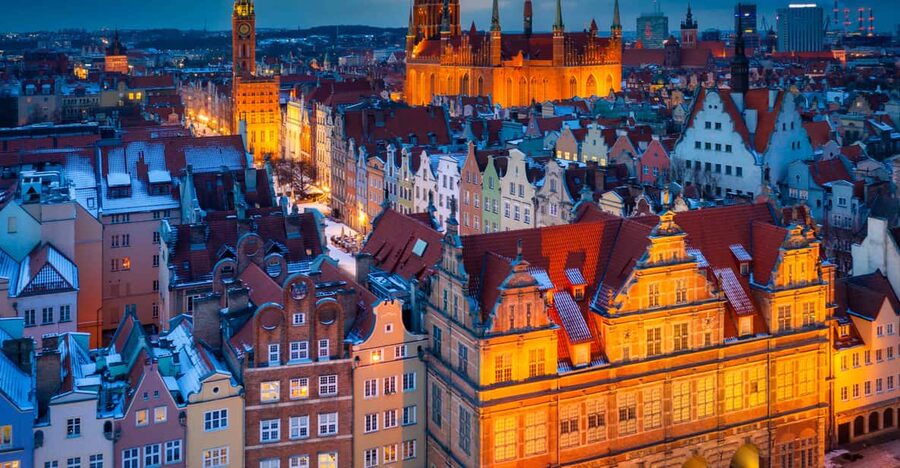
Another important stop is the Polish Post Office in the Free City of Gdańsk. This sounds like a small detail compared with a church or a gate, but it’s a smart choice for a tour like this.
Why? Because post offices sit at the intersection of people and power. They’re about messages traveling between places, and that makes them a natural bridge between the city’s historic institutions and the everyday flow of information.
This tour also includes “great ideas” created by the indigenous people of Gdańsk. Having a communications landmark on the route helps that theme land. You’re not only seeing physical buildings—you’re seeing where the city’s connections would have mattered.
If you’re interested in history beyond monuments, this stop is your kind of highlight. It adds a functional angle: even in an old city, progress traveled through systems like mail and correspondence.
Price and what $26 really buys you for 2.5 hours
At $26 per person for about 150 minutes, this is a straightforward value proposition: a guided walking experience focused on central, high-impact sights. You’re paying for a live guide in German and for someone to connect the dots while you’re on the move.
What you’re not paying for is the extra frills. Hotel pickup and drop-off aren’t included, so plan on arriving near the historic core yourself. That’s not a deal-breaker—it keeps the tour focused and cost-effective.
The price also makes it easier to fit into a day. You’re not stuck for half a day plus travel time, and you can still do your own exploring after. If you’re in town for a short stay, this kind of time efficiency is where the value shows.
And if you’re the type who likes to learn while sightseeing, the guide’s job is worth something. The guide’s explanations are clearly what people respond to—one German reviewer specifically praised Sandra for making the tour interesting and engaging, even when it was cold.
How the group tour works and why that matters
This is a general walking tour format, meaning you’ll join the standard group rather than having a fully private schedule. You’ll be walking together, listening together, and moving from stop to stop as a group.
That matters because it affects how you experience pacing. Group tours often require a bit of waiting, and they can feel slightly tighter on timing than private tours. On the upside, it also keeps the tour cost down and makes it easy to plug in without complicated scheduling.
If you want a smaller, private tour, the supplier can help organize it after booking. That can be useful if you plan to focus on your own pace or if you want extra time at one stop for questions.
For your planning: give yourself a little buffer time before the meeting. In busy old-town streets, arriving calmly helps you start the tour in the right mood.
Best for: history lovers who like their stories tied to buildings
This tour is a strong fit for you if you want:
- A German-guided walk through the most important historic center sights
- A practical route that combines architecture and civic storylines
- A tour length that feels substantial without eating your whole day
It’s also a good choice if you enjoy the “human” angle in history. The medieval crane story—moved by human muscle power—is the kind of detail that turns a landmark into a living memory.
Who might not love it: if you dislike lots of historical facts and dates, you may find the explanations sometimes heavy. One participant noted that there can be a lot of history data to track. If you know you get overwhelmed by timelines, go in with a simple goal: listen for themes, not for every date.
Should you book this Historic City Center Tour in German?
Yes, if you’re choosing between wandering aimlessly and getting a guided thread through Gdansk’s center. This tour gives you multiple anchor stops—Golden Gate, St. Mary’s Church, the crane, and the Polish Post Office in the Free City of Gdańsk—and it connects them to the city’s story in a way that’s easy to remember.
Skip it or switch to a different style if you prefer short, casual commentary and minimal history. If you tend to tune out when tours become lectures, you might find the church-focused explanation a bit much, and the overall amount of information can feel like it needs note-taking.
My practical call: book it if you want German-language context that makes the old city feel intelligible fast. It’s great value for the time, and it concentrates the best-known sights into one 2.5-hour route you can trust.
FAQ
FAQ
What language is the live tour guide?
The live tour guide speaks German.
Where do we meet for the tour?
You meet at the Golden Gate (Złota Brama). Look out for the yellow umbrellas.
How long is the tour?
The duration is 150 minutes.
Is hotel pickup included?
No, hotel pickup and drop-off are not included.
Does the tour run in bad weather?
Yes. The tour takes place rain or shine.
Is the tour wheelchair accessible?
Yes, it is wheelchair accessible.
Can I reserve now and pay later?
Yes. You can reserve your spot and pay later.
What is the cancellation policy?
You can cancel up to 24 hours in advance for a full refund.
Is this a private tour or a group tour?
It joins the general walking tour. If you want a smaller private tour, you can contact the supplier after booking to organize it.
More Gdansk Sightseeing by Day
- Gdańsk City Sights & History Guided Walking Tour in English★ 4.8 · 876 reviews
- Gdansk: City Sightseeing Tour by Golf Cart/Buggy Guided Tour★ 4.9 · 510 reviews
- Gdansk: Shared or Private City Tour Sightseeing By Golf Cart★ 4.8 · 233 reviews
- Gdansk Guided City Cruise on Historical Polish Boat★ 4.5 · 230 reviews
- Gdańsk: City Sightseeing Tour by Buggy/Golf Cart LIVE GUIDED 1H★ 5.0 · 208 reviews
More Tour Reviews in Gdansk
- Gdańsk City Sights & History Guided Walking Tour in English★ 4.8 · 876 reviews
- Gdansk: Firearm Shooting Experience with Instructor★ 4.8 · 866 reviews
- Gdansk: Guided Round-Trip Cruise to Westerplatte★ 4.3 · 865 reviews
- Gdańsk: Sightseeing EcoCruise around the Old Town of Gdansk★ 4.6 · 719 reviews
- Main Town Gdańsk Walking Tour★ 5.0 · 644 reviews
More Main Town & Long Market Walks
- Gdańsk City Sights & History Guided Walking Tour in English★ 4.8 · 876 reviews
- Gdańsk: Sightseeing EcoCruise around the Old Town of Gdansk★ 4.6 · 719 reviews
- Main Town Gdańsk Walking Tour★ 5.0 · 644 reviews
- Discover Gdansk Walking Tour★ 5.0 · 495 reviews
- Gdańsk: Old Town Private Walking Tour with Legends and Facts★ 4.9 · 245 reviews
Still deciding? Here are more Gdansk tours and Pomerania day trips we have written up
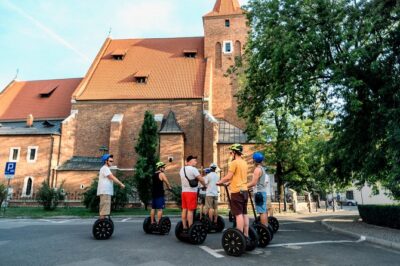

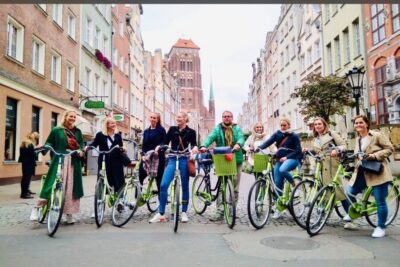

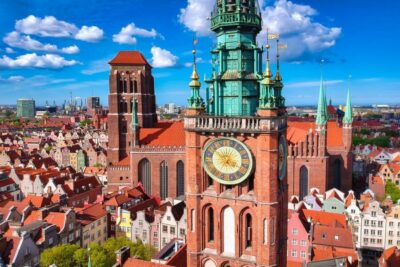

Gdansk Old Town & Main Town Walking Tours, compared.
 ★ 4.8Gdańsk City Sights & History Guided Walking Tour in EnglishFrom $26876 reviews
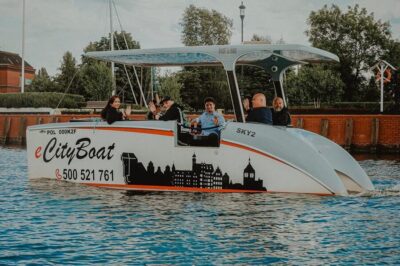 ★ 4.6Sightseeing EcoCruise around the Old Town of GdanskFrom $19719 reviews
 ★ 5.0Main Town Gdańsk Walking TourFrom $26644 reviews
 ★ 5.0Discover Gdansk Walking TourFrom $6495 reviews
 ★ 4.9Old Town Private Walking Tour with Legends and FactsFrom $107245 reviews
 ★ 4.5Gdansk Old Town 2-Hour Walking TourFrom $16794 reviews
 ★ 4.5Sunset on the Shipyard and Old Town Evening CruiseFrom $2586 reviews
 ★ 4.8Electric Scooter Tour: Old Town Gdańsk – 1,5-Hour of Magic!From $6971 reviews
Browse the lists this tour appears in