
Reviewed · GDANSK OLD TOWN & MAIN TOWN WALKING TOURS
Gdansk Old Town: German Influence Walking Tour
Gdansk feels like a layered script written by many hands, and this tour reads it line by line. I love the way the guide uses German-Polish stories to explain what you see in the streets, not just what you pass. I also like the focus on key landmarks like St. Mary’s Church, where history turns into a real sense of place.
The big payoff is the human scale: you’re guided through centuries of connection—German citizens arriving in Danzig over time, merchants chasing goods like amber, and institutions that shaped the city. One thing to consider: if you expect lots of inside time, note that the 2-hour option skips Artus Court ticket time, and the tour doesn’t include the St. Mary’s tower.
In This Review
- Key Points Before You Go
- Entering Gdansk’s Old Town From the High Gate
- The 1000+ Years Angle: How Poland and Germany Built a Shared Story
- Following the Royal Route: Golden Gate to the Long Market
- Neptune’s Fountain and the Motlawa River: Trade You Can See
- Artus Court: The Merchant Power Room (Only in the 3-Hour Option)
- St. Mary’s Church: The Final Stop With a Human Story
- The Names You’ll Connect to Street-Level Reality
- Skip the Line, Travel in Language, Keep It Personal
- Price and Value: What $108 Buys in Real Terms
- Timing, Route Length, and What to Expect in 2 vs 3 Hours
- Logistics That Actually Affect Your Day
- Who This Tour Is For (and Who Might Skip It)
- Should You Book the Gdansk Old Town German Influence Walking Tour?
- FAQ
- What is the duration of the Gdansk Old Town German Influence Walking Tour?
- Where does the tour start?
- Where does the tour end?
- What’s included in the 2-hour tour?
- What’s included in the 3-hour tour?
- Is St. Mary’s Church admission included?
- Are tickets included for the St. Mary’s Church Tower?
- Does the tour offer pickup from hotels?
- Is the tour wheelchair accessible and private?
- What languages are the guides?
Key Points Before You Go
- Two tour lengths, one clear theme: 2 hours for St. Mary’s, 3 hours adds Artus Court
- You’ll walk the Royal Route from the Golden Gate toward the Long Market area
- Hanseatic League context on the Motlawa River helps the city make sense fast
- Memorable names linked to real spots like Günter Grass, Johann Bernoulli, and Martin Opitz
- A practical stop inside St. Mary’s Church (free admission included)
- Guide quality matters: the tour’s top praise is for friendly, competent guides
Entering Gdansk’s Old Town From the High Gate
Your tour starts in a spot that helps you orient right away: the tourist information sign under the High Gate (Brama Wyżynna), on Wały Jagiellońskie 2A. It’s only about an 8-minute walk from the Main Railway Station, which is handy if you’re arriving by train and want to keep the day moving.
This is a private group tour, run with a licensed guide fluent in either German or Polish. That matters more than it sounds. When you can ask follow-up questions in the language you’re most comfortable with, the architecture and street names turn from background noise into something you can actually hold onto.
Also, you’re not starting with random facts. The theme is a very specific one: German influence in Gdansk, told through the Polish-German relationship and centuries of cultural exchange. That’s why the route feels coherent instead of like a “greatest hits” stroll.
More walks through the Main Town and the Long Market in Gdansk





The 1000+ Years Angle: How Poland and Germany Built a Shared Story
The guide frames the walk as more than an “old town sightseeing list.” You’ll hear about over 1,000 years of German-Polish relations, with the city’s shifting political and cultural ties.
The tour’s timeline is the kind that helps you connect the dots quickly. You’ll learn how the free city of Gdansk became part of the Teutonic Order for 146 years, and later connected to Prussia and the German Reich for 126. That’s not just trivia. It explains why you see German-style civic culture in buildings and why the city’s identity feels hybrid rather than one-note.
If you care about the bigger European picture—how port cities became crossroads—this is a strong match. Gdansk was shaped by trade and by people moving in and out. This tour builds that idea into the walk so you can understand why the city looks the way it does.
Following the Royal Route: Golden Gate to the Long Market
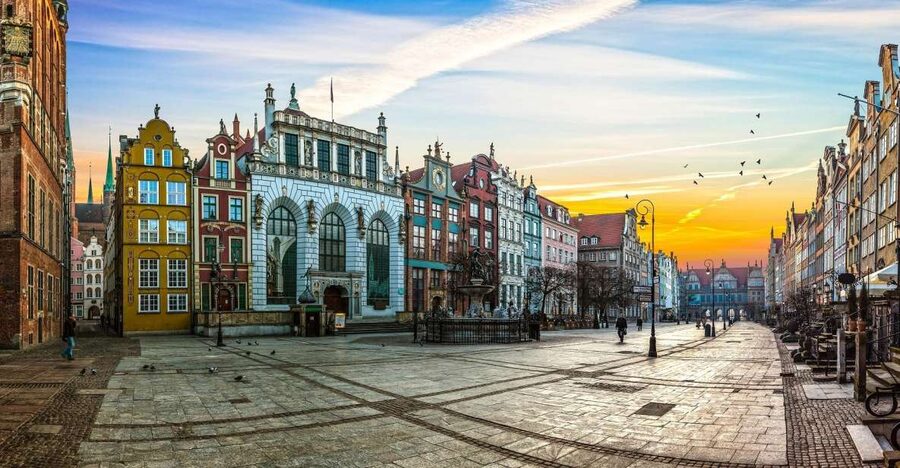
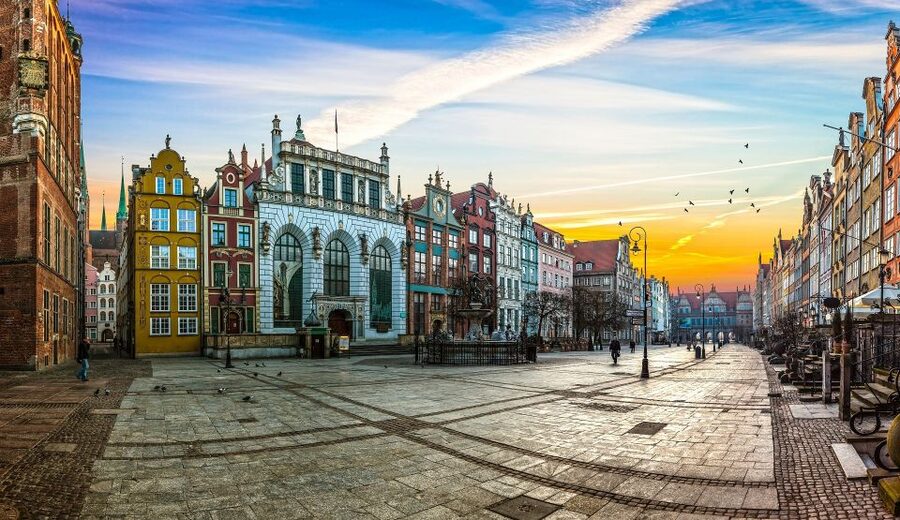
One of the tour’s best structure choices is route logic. You’ll follow a “royal route” idea from the Golden Gate toward the Long Market area. Even if you’ve seen Old Town postcards before, doing this with a guide turns it into a story you can track with your feet.
This part emphasizes the wealthy German merchants who arrived during the city’s heyday, often in pursuit of valuable goods like amber. That detail is useful because amber isn’t just a romantic souvenir story—it’s a clue to why Gdansk grew into a trade magnet in the first place.
As you walk, you’ll hear how commerce shaped city power. The Hanseatic world wasn’t abstract. It put money behind buildings, governance, and the kind of public spaces merchants needed to meet and negotiate. So when you pass major squares and civic facades, you’ll understand what they were for.
Neptune’s Fountain and the Motlawa River: Trade You Can See
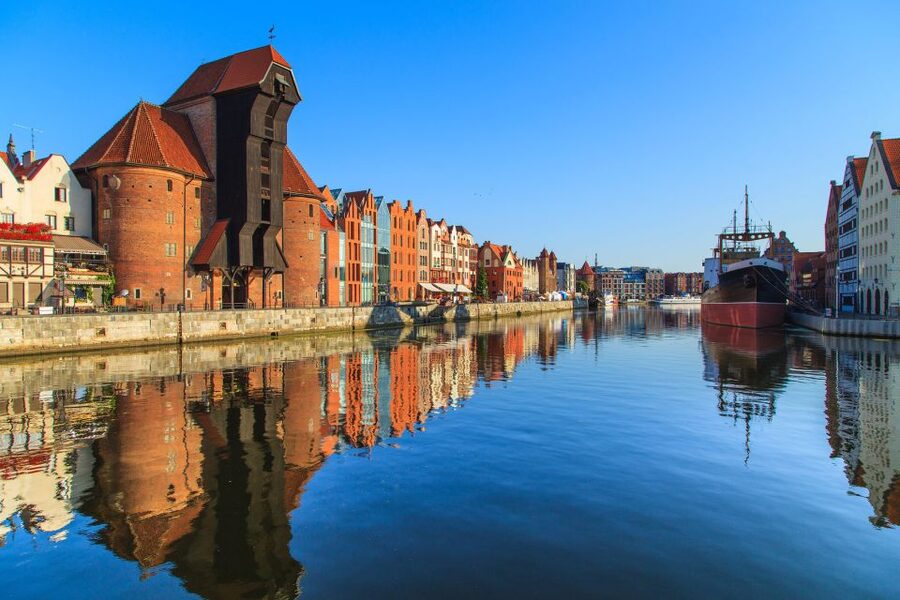
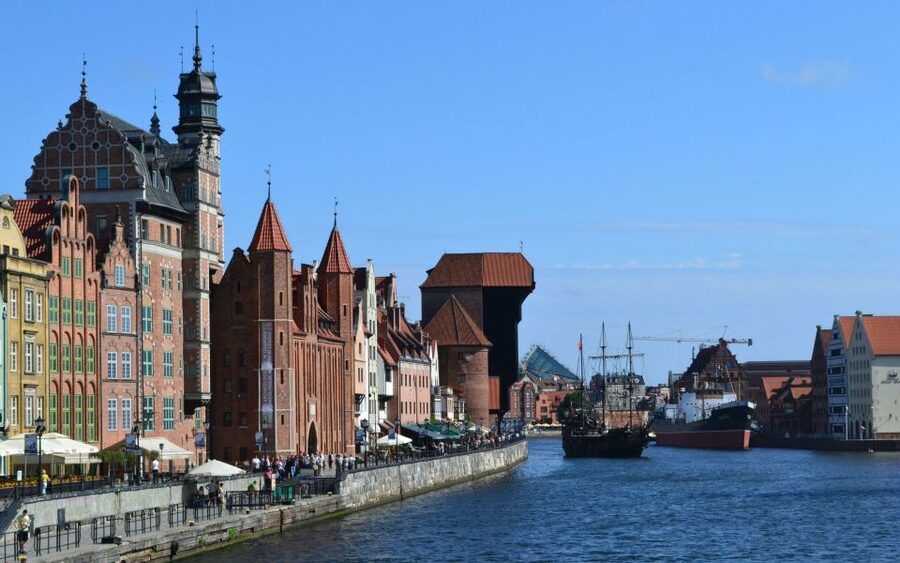
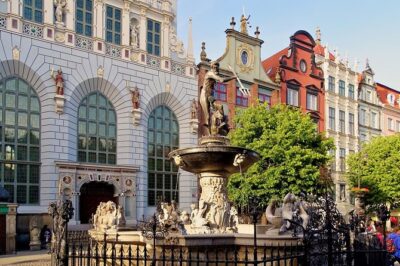
At some point, you’ll pass Neptune’s Fountain and then pause for the view and atmosphere near the Motlawa River. This is where the tour earns its place for anyone who likes ports and trade history.
Why the river stop works: the Motlawa was described as one of the most important ports of the Hanseatic League. Once you know that, the river isn’t just scenery. It’s the engine that carried goods and influenced who had influence in the city.
You don’t need to be a history buff to get it. Ports change how towns feel—more movement, more money, more international contact. This tour nudges you to look at the waterfront area with that in mind, instead of treating it like a photo moment.
Artus Court: The Merchant Power Room (Only in the 3-Hour Option)
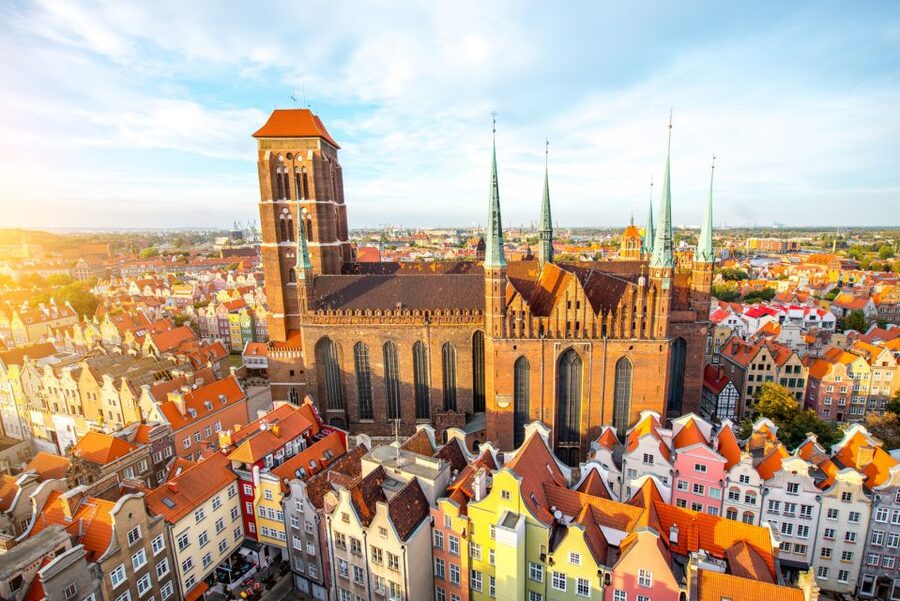
If you book the 3-hour tour, you’ll include Artus Court (Artus Dwór) as well—this option includes tickets. The 2-hour version covers St. Mary’s, but it doesn’t include Artus Court ticket time.
Artus Court is a big deal because it represents civic and economic power during the 16th and 17th centuries. The guide will show you German influences inside this meeting place for merchants, and you’ll get at least a taste of the argument behind it: trade wasn’t just about shipping. It was also about gatherings, status, and shared decision-making.
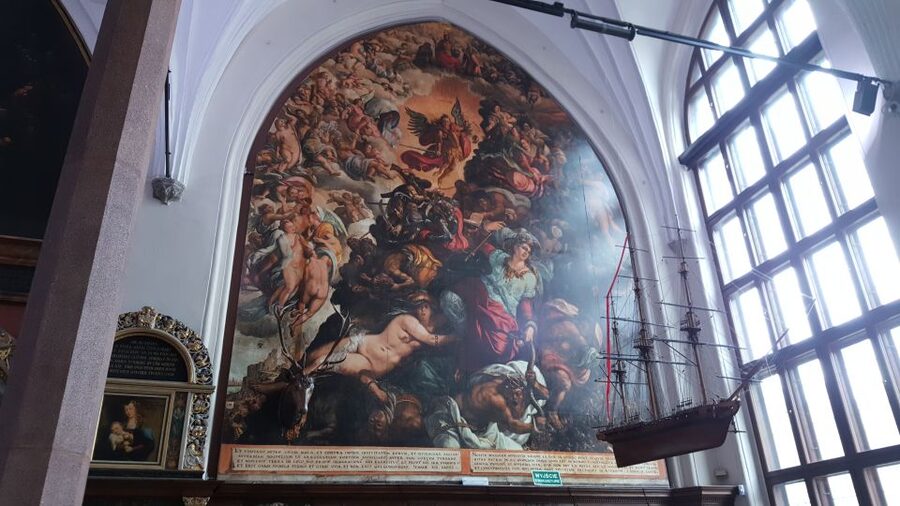
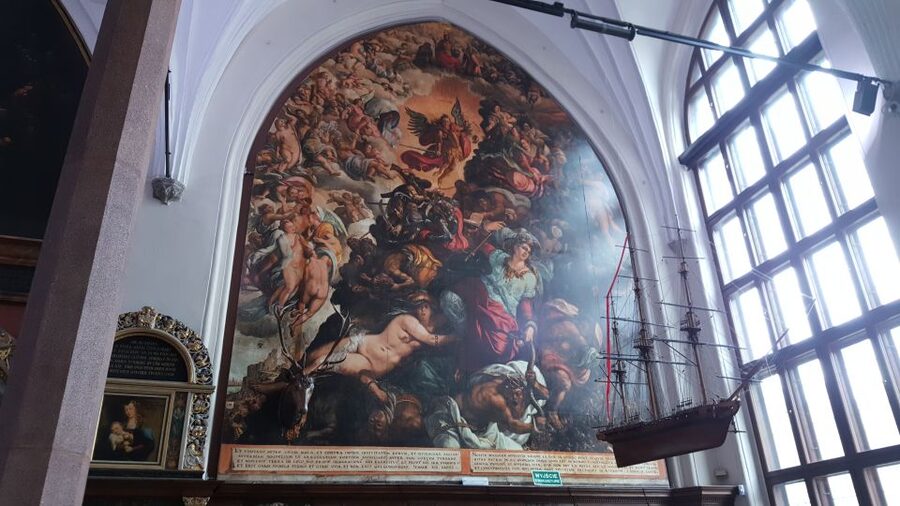
One specific highlight inside Artus Court is the Last Judgment painting by Anton Möller. The guide flags it as controversial, which is a good sign you’re getting interpretation rather than just decoration talk. When a guide tells you why something was debated, you learn faster and you remember longer.
If you’re choosing between the two time slots: the 3-hour tour is the better pick if you want the “power room” part of the story. The 2-hour tour is fine if you mainly want the big landmarks and don’t need extra ticket-based indoor time.
- Gdańsk City Sights & History Guided Walking Tour in English
★ 4.8 · 876 reviews - Gdansk: Firearm Shooting Experience with Instructor
★ 4.8 · 866 reviews - Gdansk: Guided Round-Trip Cruise to Westerplatte
★ 4.3 · 865 reviews - Gdańsk: Sightseeing EcoCruise around the Old Town of Gdansk
★ 4.6 · 719 reviews
St. Mary’s Church: The Final Stop With a Human Story
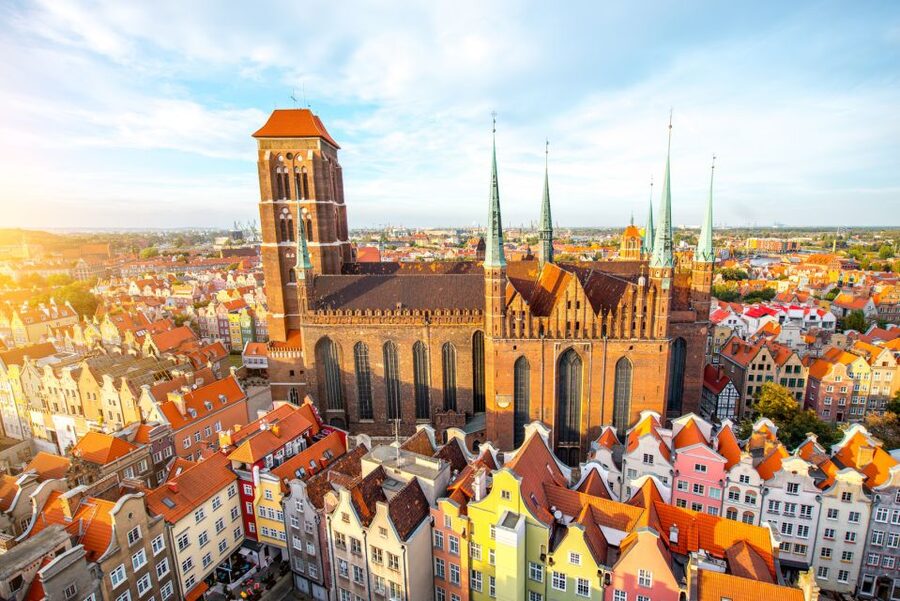
Whether you choose the 2-hour or 3-hour option, St. Mary’s Church is part of the plan, and in both cases you’ll end with an inside visit. The tour includes free admission to St. Mary’s Church, and it also notes that the guide may share information outside when services or special events limit access.
Here’s why I think this stop is worth your time: the church connects the tour’s theme to a very grounded human link. You’ll learn that Martin Opitz, a German Baroque poet, is buried there. That kind of detail turns the building from “nice architecture” into a real anchor point for cultural exchange.
Also, you should know what’s not included. Tickets for the St. Mary’s Church Tower aren’t part of this tour. If you want those views specifically, plan to get tower access separately. Otherwise, you might finish the tour expecting a tower option that isn’t included.
If you time your day around a church visit, give yourself mental space to slow down. This stop is best treated as a “listen and look” moment, not a rush to tick off interiors.
The Names You’ll Connect to Street-Level Reality
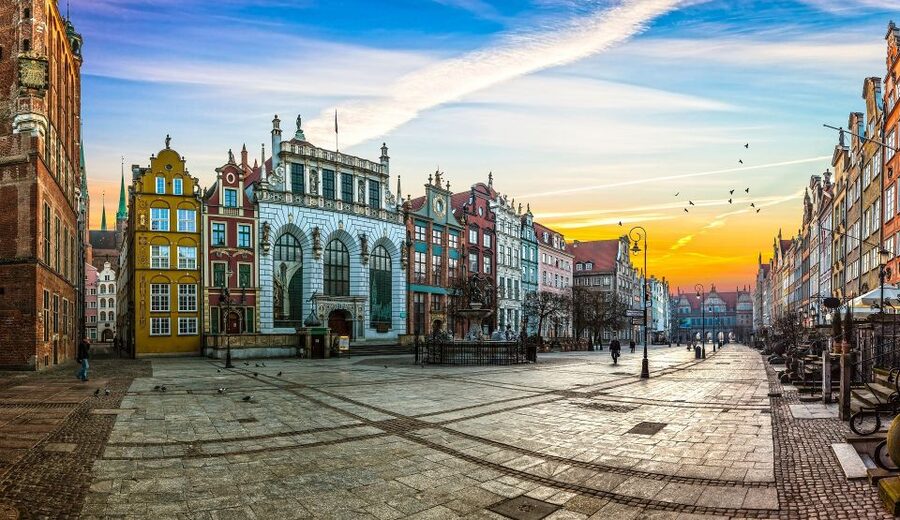
This tour does something smart with famous names: it ties them to places you can point to while the story plays out.
You might hear about Johann Bernoulli, an astronomer connected to the city’s intellectual atmosphere. You might also hear Günter Grass, including the fact that the Nobel Prize-winning author set his famous Danzig Trilogy (including The Tin Drum) in Gdansk. That’s a strong bridge for literary travelers because it shows how a city’s identity can live on in fiction.
Then there’s Barthel Ranisch, credited with building the Royal Chapel—another example of how German influence can show up in specific architectural decisions.
And, as mentioned, Martin Opitz appears again at St. Mary’s with his burial. This is the kind of repetition that works on walking tours: you remember fewer names better when they land at meaningful locations.
Skip the Line, Travel in Language, Keep It Personal
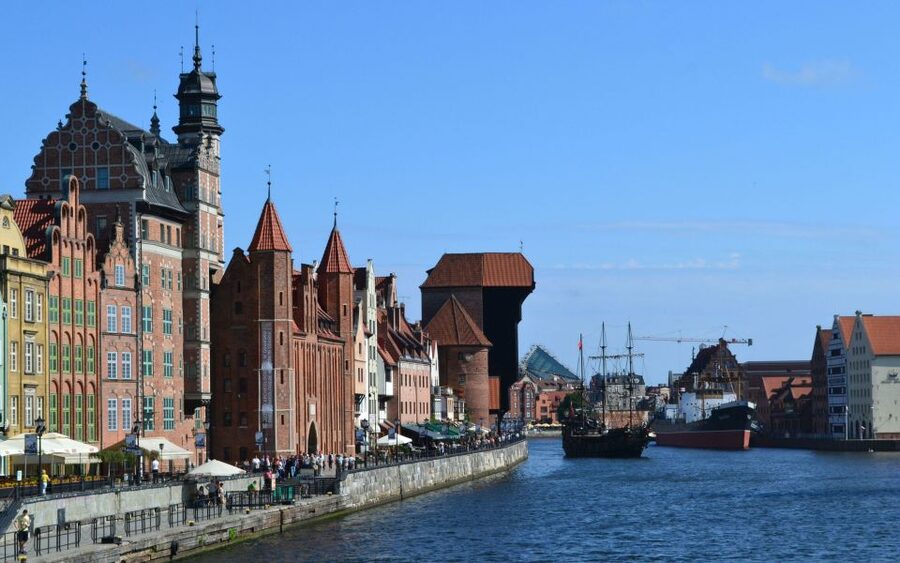
Even with Old Town locations, the tour is built to reduce friction. It includes free admission to St. Mary’s Church, and it also says there’s skip the ticket line (your experience may still include waiting depending on timing, but the design is clearly meant to keep you moving).
The language options—German and Polish—also make a difference. You get live interpretation from a licensed guide fluent in your chosen language. For many visitors, that’s the difference between hearing history as a voice in the background versus understanding it as a set of connected ideas.
And yes, private group matters. You’re not stuck with a pacing mismatch that forces you to either slow down or speed up. The walk is shorter (2–3 hours), so staying on the right tempo helps you actually absorb the stops.
Price and Value: What $108 Buys in Real Terms
At $108 per person, this tour sits in the mid-to-upper range for a walking tour. The question is what you get for that money, and the answer is mostly about interpretation and access.
You’re paying for:
- A 5-star licensed guide (the tour has strong praise for friendly, competent guides)
- A focused theme tied to actual sites, including St. Mary’s Church
- Optional indoor ticket time at Artus Court if you choose the 3-hour slot
- A route that includes the Golden Gate, Long Market area, Neptune’s Fountain, and Motlawa River context rather than random stops
If you compare it to a self-guided plan, the big advantage is time and meaning. On your own, you can see the buildings, but you’ll likely miss the “why” behind political shifts, merchant culture, and specific works like Anton Möller’s Last Judgment.
If you’re the type who enjoys history but wants it delivered without turning into a lecture, this price can feel fair. The tour is short enough to fit a day plan, but structured enough to give you a coherent story.
Timing, Route Length, and What to Expect in 2 vs 3 Hours
The tour runs 2–3 hours depending on the option you select, with specific starting times based on availability.
Here’s how to think about the two versions:
2-hour tour (German trail + St. Mary’s Church)
- More direct and efficient
- Includes St. Mary’s visit with free admission
- Does not include Artus Court tickets, so you get less indoor “merchant power” detail
3-hour tour (adds Artus Court)
- Adds ticketed time at Artus Court
- Gives you more of the merchant-centered story
- Often the better fit if you want both the public streets and the interior “where decisions were made” aspect
If you’re tightly scheduled, pick 2 hours. If you want the thicker layer of context and indoor access, choose 3 hours.
Logistics That Actually Affect Your Day
This tour is designed to be easy to meet and start, but a few details are worth knowing.
You meet under the tourist information sign beneath the High Gate (Brama Wyżynna), Wały Jagiellońskie 2A. The tour ends back at the same meeting point, which keeps planning simple.
Pickup is available only for accommodations in the Old Town. If your address isn’t provided, or if it’s more than 1.5 km away from the meeting point, the guide will meet you at the High Gate sign instead. So if you’re booking with pickup, double-check you’ve entered your full address during booking.
One more practical note: the tour says to check your email the day before for important information. Do it. On tours like this, it’s often where timing tweaks and meeting-day reminders live.
Who This Tour Is For (and Who Might Skip It)
This tour is a strong fit if you:
- Like walking tours that connect architecture to political and cultural change
- Want a Germany-Poland lens without getting stuck in abstract debate
- Appreciate specific landmark visits like St. Mary’s Church and Artus Court
- Enjoy stories with recognizable names like Günter Grass and Johann Bernoulli
You might think twice if you’re mainly chasing views and photo spots and aren’t that interested in trade and governance. Also, if you specifically want the St. Mary’s Church tower climb, this isn’t the built-in option since tower tickets aren’t included.
Should You Book the Gdansk Old Town German Influence Walking Tour?
If your goal is to understand Gdansk as a crossroads city—shaped by trade, changing rule, and shared culture—this is a smart booking. The best sign is the guide quality: it’s been praised for being both friendly and competent, which is exactly what you want when the subject spans centuries.
I’d book the 3-hour option if you want the fuller story that includes Artus Court and the merchant-power angle inside. I’d choose the 2-hour option if you’re short on time but still want a guided, meaningful visit to St. Mary’s Church and the highlights tied to the royal route and the river/port context.
One last tip for decision-making: if you plan to spend a lot of time exploring the Old Town on your own anyway, the shorter version can be enough. If you want the guide to do most of the connecting-the-dots work, go for 3 hours.
FAQ
What is the duration of the Gdansk Old Town German Influence Walking Tour?
The tour is offered in 2-hour and 3-hour options, with the activity generally lasting 2–3 hours depending on what you select. Starting times depend on availability.
Where does the tour start?
You meet your guide in front of the tourist information sign under the High Gate (Brama Wyżynna), Wały Jagiellońskie 2A, 80-887 Gdańsk.
Where does the tour end?
The activity ends back at the same meeting point.
What’s included in the 2-hour tour?
The 2-hour tour includes the German history focus of the Old Town and a visit to St. Mary’s Church. Artus Court tickets are not included in this option.
What’s included in the 3-hour tour?
The 3-hour tour includes the Old Town German trail plus a visit to St. Mary’s Church and Artus Court. Tickets to Artus Court are included in this option.
Is St. Mary’s Church admission included?
Yes. The tour includes free admission to St. Mary’s Church.
Are tickets included for the St. Mary’s Church Tower?
No. Tickets to the St. Mary’s Church Tower are not included.
Does the tour offer pickup from hotels?
Pickup is available for accommodations/hotels located in the Old Town. If you don’t provide your address or your accommodation is more than 1.5 km away from the meeting point, the guide will meet you at the High Gate sign.
Is the tour wheelchair accessible and private?
Yes. The tour is listed as wheelchair accessible and it runs as a private group.
What languages are the guides?
The live tour guide is available in German and Polish.
More Tour Reviews in Gdansk
- Gdańsk City Sights & History Guided Walking Tour in English★ 4.8 · 876 reviews
- Gdansk: Firearm Shooting Experience with Instructor★ 4.8 · 866 reviews
- Gdansk: Guided Round-Trip Cruise to Westerplatte★ 4.3 · 865 reviews
- Gdańsk: Sightseeing EcoCruise around the Old Town of Gdansk★ 4.6 · 719 reviews
- Main Town Gdańsk Walking Tour★ 5.0 · 644 reviews
More Main Town & Long Market Walks
- Gdańsk City Sights & History Guided Walking Tour in English★ 4.8 · 876 reviews
- Gdańsk: Sightseeing EcoCruise around the Old Town of Gdansk★ 4.6 · 719 reviews
- Main Town Gdańsk Walking Tour★ 5.0 · 644 reviews
- Discover Gdansk Walking Tour★ 5.0 · 495 reviews
- Historic City Center Tour Gdansk in German★ 4.6 · 455 reviews
Still deciding? Here are more Gdansk tours and Pomerania day trips we have written up

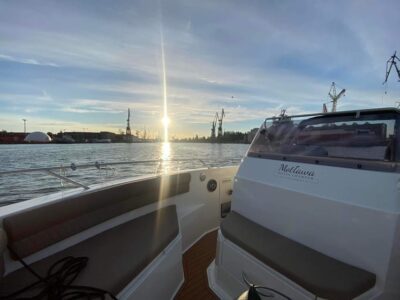
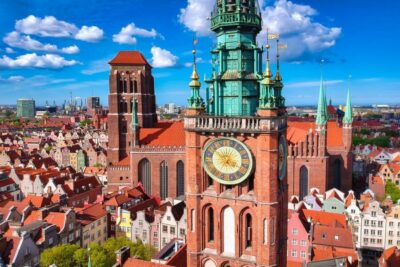

Gdansk Old Town & Main Town Walking Tours, compared.
 ★ 4.8Gdańsk City Sights & History Guided Walking Tour in EnglishFrom $26876 reviews
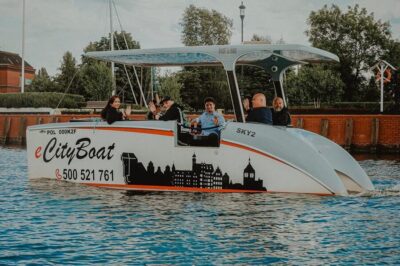 ★ 4.6Sightseeing EcoCruise around the Old Town of GdanskFrom $19719 reviews
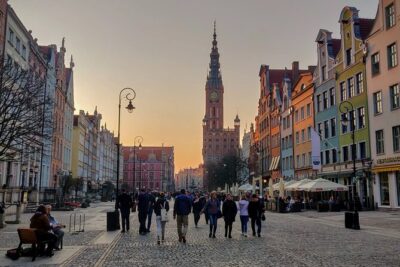 ★ 5.0Main Town Gdańsk Walking TourFrom $26644 reviews
 ★ 5.0Discover Gdansk Walking TourFrom $6495 reviews
 ★ 4.6Historic City Center Tour Gdansk in GermanFrom $26455 reviews
 ★ 4.9Old Town Private Walking Tour with Legends and FactsFrom $107245 reviews
 ★ 4.5Gdansk Old Town 2-Hour Walking TourFrom $16794 reviews
 ★ 4.5Sunset on the Shipyard and Old Town Evening CruiseFrom $2586 reviews
Browse the lists this tour appears in