
Reviewed · MOTLAWA RIVER CRUISES & BOAT TOURS
Cruises on the Motlawa River by a luxury catamaran – Gdańsk from the water side
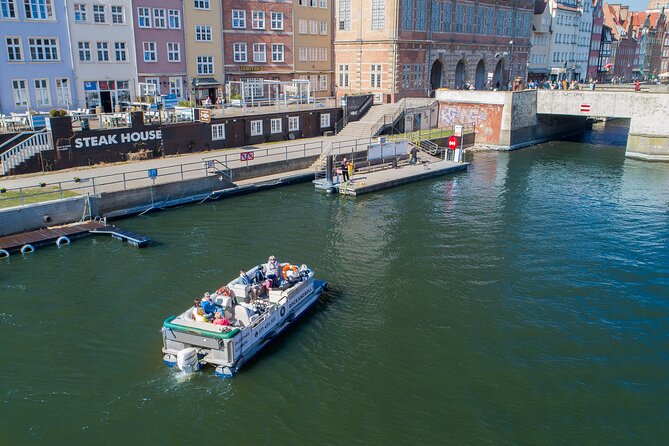
Cruises can be the best walking plan. This luxury catamaran ride along Gdańsk’s Motława River lets you see major sights from the water in about 45 minutes, with a small group (max 12) so you’re not fighting for space. I really like the English narration with onboard audio (and the added English handouts/pictures), plus the photo-friendly angles at landmarks like the Crane and Granary Island.
The main thing to keep in mind is that the sightseeing explanation is delivered through speakers rather than a hands-on, live guide conversation, so it feels more like polished commentary than a chatty tour.
For the money, you’re paying for convenience and views. You also get a route packed with recognizable history—Teutonic-era remnants, granaries, islands, and church towers—without the stress of hopping between neighborhoods on foot.
In This Review
- Key things I’d remember before you go
- Why a Motława River catamaran beats tired feet in Gdańsk
- Price and what $19.78 gets you (and what it doesn’t)
- Where you meet: Green Bridge is your easy start line
- Stop-by-stop: Motława Riverfront highlights from the water
- Motława River Embankment (Długie Pobrzeże) area
- The medieval Crane
- SS Soldek
- St. John’s Church (Kościół św. Jana) from the river approach
- Granary islands and Wyspa Ołowianka: where Gdańsk’s layers show
- Wyspa Spichrzów (Granary Island) and the Long Way granary wall
- Wyspa Ołowianka: a practical slice of urban history
- Dlugi Targ Square, Fish Market views, and Brama Stagiewna angles
- Długie Targ Square and the Fish Market
- Brama Stagiewna (Stagiewna Street crossing)
- On-board experience: luxury catamaran comfort and English narration
- The small-group limit: why max 12 matters on the water
- The one drawback to weigh: recorded commentary over live guiding
- Who should book this Motława cruise?
- Should you book it?
- FAQ
- How long is the cruise on the Motława River?
- Where does the cruise start?
- Is the tour offered in English?
- How many people are on the boat?
- Do I need separate tickets for the sights we pass?
- What happens if the weather is bad?
Key things I’d remember before you go
- Small group comfort: capped at 12 people, so the boat doesn’t feel crowded.
- English-friendly experience: narration is offered in English, with extra English materials to support the story.
- Landmarks in quick succession: Crane, St. John’s Church area, granary islands, and more, all from one ride.
- Great photo moments: the water gives you angles you can’t get from the sidewalk.
- Weather-proof touches: you may find blankets onboard, which helps when it’s cool.
- Relaxed pace: the whole loop is about 45 minutes, designed for easy sightseeing.
Why a Motława River catamaran beats tired feet in Gdańsk
Gdańsk rewards slow wandering. The downside? Your legs can tap out faster than your curiosity. This cruise is built for that exact moment: you get a concentrated tour view while sitting down, and the boat naturally carries you along the riverfront where the city’s big landmarks line up.
Even in a short window, the route is clever. You’re not just passing generic scenery. The catamaran tracks the Motława’s historic edges, so you get the city’s layout in one sweep—water gates, old embankments, islands, church towers, and the skyline shapes that make Gdańsk recognizable.
It’s also a smart choice if you want photos without doing the heavy lifting. From the water, the medieval crane reads instantly, and the granary areas look more like what they were built for: commerce, shipping, and storage right on the river.
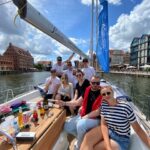
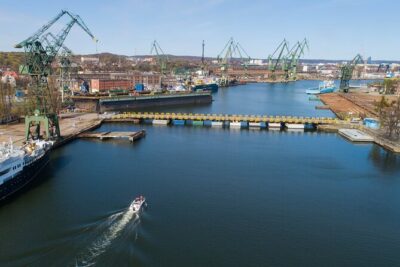
More Motlawa river cruises past the old Crane in Gdansk

Price and what $19.78 gets you (and what it doesn’t)
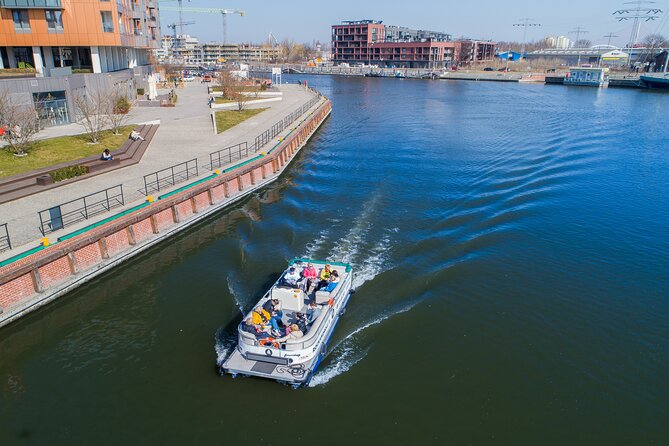
At $19.78 per person for about 45 minutes, the value is mostly about efficiency. You’re not paying for a museum ticket or a packed day of transfers. You’re paying for one relaxing ride that gives you broad sight coverage at once.
A useful point: the stops you see from the boat are listed as admission ticket free. That matters because it helps you avoid the extra costs that can pop up when sightseeing turns into a ticket checklist. You still get sights tied to serious history—just seen from the river without gate fees.
The trade-off is time and depth. A 45-minute cruise can’t replace walking tours with long stops for details. But if your priority is getting oriented fast and collecting the most iconic views with minimal effort, this is priced like a practical shortcut.
Also, the experience is commonly booked about 11 days in advance. If you’re traveling in peak season or on a busy weekend, that’s a hint to reserve sooner rather than later so your timing matches your plans.
Where you meet: Green Bridge is your easy start line
You start and end at the Green Bridge (Stara Motława, Gdańsk). That’s convenient because it anchors the cruise in the historic river area, so you’re not trekking across town to catch it.
The meeting point is also described as near public transportation, which you’ll appreciate if you’re combining this with other sightseeing. In practice, it keeps the day flexible: you can go straight to the bridge, hop on, and then get off back where you’re already set up to continue exploring.
If you like arriving early, do it. Even a short check-in can feel quick when you’re eager to see the first landmarks from the water.
Stop-by-stop: Motława Riverfront highlights from the water
The cruise is designed around a loop of river scenes, and the first stretch sets the tone. You’ll view the river embankment area and key structures that connect Gdańsk’s medieval past to its waterfront economy.
Motława River Embankment (Długie Pobrzeże) area
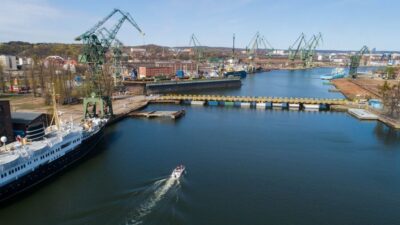
This is where the “why the water matters” feeling starts. From the catamaran you’ll see remnants tied to the Teutonic Castle wall, plus the Long Seacoast (Długie Pobrzeże) line with water gates that once led into the city. It’s the kind of urban design detail you’d likely miss if you were just walking past.
You’ll also get views of the Crane from the 15th century, and the river’s islands: Ołowianka Island and Wyspa Spichrzów/Granary Island areas. What’s great here is the perspective. The riverfront isn’t just a backdrop—it’s part of the story of how the city functioned.
Then the ride returns toward the Green Bridge, with a pass by the Marina of Gdańsk along the way. That little change of scenery can make the cruise feel more like a real river outing rather than a single straight-line sight pass.
More Gdansk river and bay cruises worth the water
- Gdansk: Guided Round-Trip Cruise to Westerplatte
★ 4.3 · 865 reviews - Gdansk Guided City Cruise on Historical Polish Boat
★ 4.5 · 230 reviews - Gdańsk: Motława River Eco Cruise at Sunset with Prosecco
★ 4.8 · 142 reviews - Sightseeing Cruise around the Old Town of Gdansk
★ 4.0 · 22 reviews
The medieval Crane
Seeing the Crane from the water is the point. It’s described as the largest medieval crane in Europe, and from this route it’s easy to understand why it became so iconic.
From the boat, you get a more balanced view of size and setting. Up close from streets, you can miss the full context. Out on the water, the Crane reads as a landmark built for river operations—something practical, not just decorative.
SS Soldek
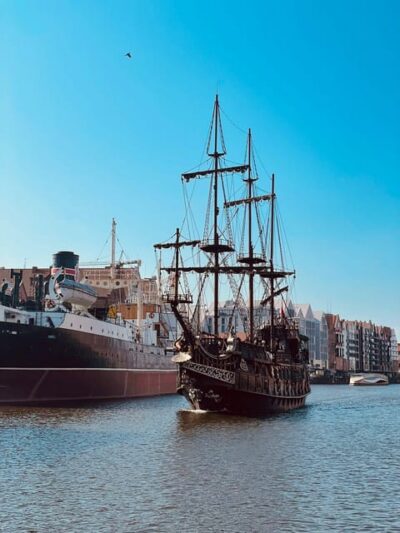
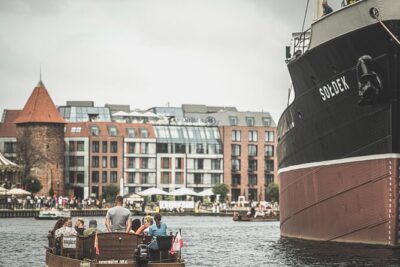
You’ll also see SS Soldek, described as the first ship built in Poland after World War II. Even without stepping onto anything, the sight from the river provides a useful historical contrast: medieval infrastructure and later shipbuilding heritage in the same visual corridor.
It’s a nice touch because it keeps the cruise from feeling stuck in one time period.
St. John’s Church (Kościół św. Jana) from the river approach
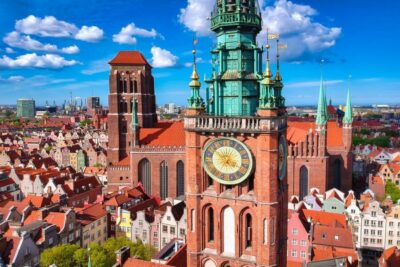
Church towers are easier to notice than you think, and the route uses that. You’ll see St. John’s Church with the town hall area visible from the yacht viewpoint.
The information adds another layer: behind St. John’s Church, you can see the world’s largest brick church. From the water, that kind of sightline detail is exactly why a river cruise works. You’re not just looking at architecture; you’re tracking how the city’s major buildings relate to each other spatially.
One practical note: this section is mostly about sightlines. If you’re hoping for close-up walking access, this ride is about views you can capture from the water rather than a stop-and-go checkpoint tour.
Granary islands and Wyspa Ołowianka: where Gdańsk’s layers show
After the early riverfront landmarks, the cruise moves into the island areas that help explain Gdańsk’s evolution.
Wyspa Spichrzów (Granary Island) and the Long Way granary wall
You’ll see the preserved wall connected to the Long Way granary. That’s a key part of why the waterfront matters so much here: the city’s trading life shaped what got built right along the river.
From a photo perspective, this is also one of the calmer areas where the architecture looks crisp. It’s a good moment to slow down your shooting and frame the wall and river together.
Wyspa Ołowianka: a practical slice of urban history
Ołowianka is described as a fragment where different threads of city history intersect. It began under the Teutonic Order and served as an economic base for the commander’s castle.
Saying it simply: you’re not just viewing one landmark; you’re seeing the waterfront as a changing system. A place that started tied to military order later becomes part of the trading fabric—right where ships and goods moved.
If you like your sightseeing grounded in how cities work—who used the space, why it was built—this section lands well.
Dlugi Targ Square, Fish Market views, and Brama Stagiewna angles
The later part of the loop keeps feeding you recognizable “oh, I’ve seen that” shapes around the waterfront.
Długie Targ Square and the Fish Market
You could admire Długie Targ Square, and you’ll also see the Fish Market area. The commentary points out that Gdańsk used to have many more such markets.
That’s a helpful perspective because it nudges you to notice what’s missing, not just what remains. When you see fewer markets than in the past, you start to understand how commerce and city life shifted.
Brama Stagiewna (Stagiewna Street crossing)
You’ll see Brama Stagiewna, which is tied to Stagiewna Street crossing the Granary Island and starting at the Green Bridge. This is the kind of detail that’s hard to picture from land without context—on the cruise, it clicks.
If you’re a “draw me a mental map” person, this will help. You’ll leave with a clearer sense of how the river connects the areas around it.
On-board experience: luxury catamaran comfort and English narration
Calling it luxury isn’t only about aesthetics. It shows up in small comfort choices.
First, the boat setting is described as cozy and friendly. The crew is welcoming, and the overall vibe feels relaxed rather than rigid. That matters because short sightseeing can become stressful when people are rushed. Here, the pace stays easy.
Second, English support is a big win. The narration is delivered through speakers, and there are English handouts and pictures to go with what you hear. If you’re the kind of person who likes to follow along while snapping photos, that combination helps you connect the sound to what you’re actually seeing.
Third, practical comfort upgrades show up when it’s cooler. One of the reviews specifically noted blankets onboard, which you’ll appreciate if you’re out on the river in fall or spring.
Finally, there’s some flexibility. In at least one case, the captain allowed a time rearrangement when the group was running late. That’s not something you should plan your day around, but it’s reassuring if your travel schedule is messy.
The small-group limit: why max 12 matters on the water
A capped group size of 12 isn’t just a comfort brag. On a river cruise, your experience depends on how easy it is to see and photograph.
With a smaller group, you get:
- better sightlines toward the Crane and church towers
- less bumping while you angle for photos
- a quieter overall ride, which makes the English audio easier to follow
It also makes the onboard vibe feel more like a shared excursion than a cattle-car tour. Even with pre-recorded narration, smaller groups tend to make the experience feel more human.
The one drawback to weigh: recorded commentary over live guiding
Here’s the honest trade-off. The commentary is delivered through audio rather than a live guide doing back-and-forth explanations. If you want a guide who can answer questions or tailor the story to your interests, this won’t fully scratch that itch.
It also means the experience may feel less “personal.” If you’re craving warmth and interaction, another type of guided tour might suit you better.
But if your goal is simple—get the key sights, understand them at a basic level in English, and do it without extra walking—this format works.
Who should book this Motława cruise?
I think it fits best if you:
- want iconic Gdańsk views without draining your legs
- like short sightseeing blocks that you can pair with other plans
- prefer English narration with supporting materials
- value a small group and photo-friendly river perspectives
- are traveling with limited time but still want history points
It’s also a strong pick if the weather has you thinking twice about long walking routes. A good-weather requirement applies, but when the day cooperates, this is a very workable way to see a lot.
Should you book it?
Yes, I’d book this if you want a relaxed, English-friendly way to get oriented on Gdańsk’s waterfront. The price feels fair for what you’re getting: a short loop packed with recognizable landmarks, delivered with easy-to-follow commentary and thoughtful comfort touches like blankets.
Skip it only if you strongly prefer live, interactive guiding or if you’re looking for a deeper, step-by-step walking interpretation of details. For pure convenience and river views in under an hour, this catamaran ride is the sort of plan that makes the whole trip feel smoother.
FAQ
How long is the cruise on the Motława River?
It lasts about 45 minutes.
Where does the cruise start?
The meeting point is the Green Bridge in the Stara Motława area of Gdańsk, and the activity ends back at the same meeting point.
Is the tour offered in English?
Yes, it’s offered in English.
How many people are on the boat?
The tour has a maximum group size of 12 travelers.
Do I need separate tickets for the sights we pass?
The sights listed along the route are marked as admission ticket free, meaning you’re not expected to buy extra admission for what you see from the boat.
What happens if the weather is bad?
This experience requires good weather. If it’s canceled due to poor weather, you’ll be offered a different date or a full refund.
More Gdansk River & Bay Cruises
- Gdansk: Guided Round-Trip Cruise to Westerplatte★ 4.3 · 865 reviews
- Gdańsk: Motlawa River Yacht Cruise★ 4.6 · 272 reviews
- Gdansk: Scenic Evening Yacht Cruise with Welcome Drink★ 4.4 · 234 reviews
- Gdansk Guided City Cruise on Historical Polish Boat★ 4.5 · 230 reviews
- Gdańsk: Scenic Sunset Cruise with Welcome Drink★ 4.3 · 220 reviews
More Tour Reviews in Gdansk
- Gdańsk City Sights & History Guided Walking Tour in English★ 4.8 · 876 reviews
- Gdansk: Firearm Shooting Experience with Instructor★ 4.8 · 866 reviews
- Gdansk: Guided Round-Trip Cruise to Westerplatte★ 4.3 · 865 reviews
- Gdańsk: Sightseeing EcoCruise around the Old Town of Gdansk★ 4.6 · 719 reviews
- Main Town Gdańsk Walking Tour★ 5.0 · 644 reviews
More Motlawa River Cruises & Boat Tours
- Gdansk: Guided Round-Trip Cruise to Westerplatte★ 4.3 · 865 reviews
- Gdańsk: Sightseeing EcoCruise around the Old Town of Gdansk★ 4.6 · 719 reviews
- Gdańsk: Motlawa River Yacht Cruise★ 4.6 · 272 reviews
- Gdansk Guided City Cruise on Historical Polish Boat★ 4.5 · 230 reviews
- Gdańsk: Motława River Eco Cruise at Sunset with Prosecco★ 4.8 · 142 reviews
Still deciding? Here are more Gdansk tours and Pomerania day trips we have written up


Motlawa River Cruises & Boat Tours, compared.
 ★ 4.3Guided Round-Trip Cruise to WesterplatteFrom $33865 reviews
 ★ 4.6Sightseeing EcoCruise around the Old Town of GdanskFrom $19719 reviews
 ★ 4.6Motlawa River Yacht CruiseFrom $18272 reviews
 ★ 4.5Gdansk Guided City Cruise on Historical Polish BoatFrom $21230 reviews
 ★ 4.8Motława River Eco Cruise at Sunset with ProseccoFrom $26142 reviews
 ★ 4.6Motlawa and Port yacht cruise with Welcome DrinkFrom $26115 reviews
 ★ 4.5Cruises on the Motlawa RiverFrom $1966 reviews
 ★ 4.9Gdansk/Sopot: Breakfast Cruise on a CatamaranFrom $5342 reviews
Browse the lists this tour appears in