
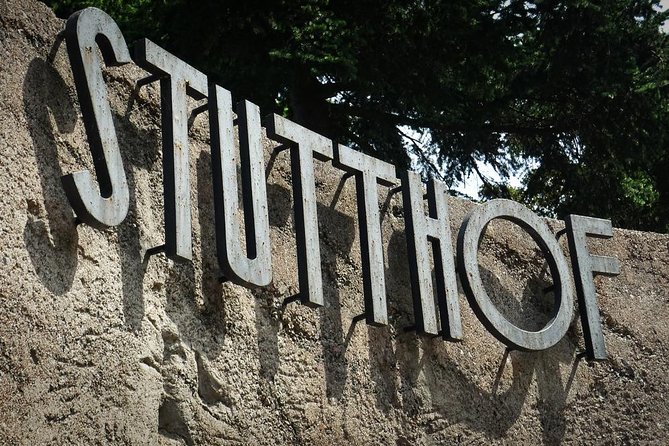
Reviewed · STUTTHOF MUSEUM MEMORIAL TOURS
Stutthof Concentration Camp Regular Tour from Gdansk
Stutthof is one tough stop. This half-day tour from Gdansk gives you a small-group, capped-at-16 visit with a licensed English guide, plus door-to-door pickup that keeps the logistics painless. I especially like the focused guided route through the old and new camp areas, and the respectful pace that includes time to reflect. The main consideration: you only get a short free window on your own, so if you want to linger on exhibits, you may feel time pressure.
You’ll start early (8:00 am), ride out in a comfortable vehicle, and spend most of your morning at the museum guided walk through key sites—yes, including the gas chambers and crematorium. It’s not a feel-good tour, but it’s built to help you understand what happened without turning it into a rushed checklist. Just bring patience for a sensitive subject and be ready for some walking on uneven, outdoor paths.
In This Review
- Key Points at a Glance
- A Sobering Half-Day Ride Out of Gdansk
- Hotel Pickup and Small-Group Comfort (Max 16)
- How the Tour Timeline Really Works (4–5 Hours Total)
- Entering the Museum: What You Learn Before You Walk the Grounds
- Inside Stutthof: Old and New Quarters, and the Commander’s Villa
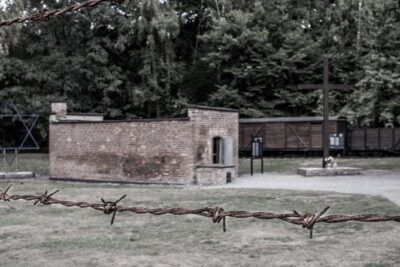
- The Gas Chambers and Crematorium: Why Timing Matters Here
- The Short Free Window: Useful for Reflection, Not Enough for Deep Reading
- Price and Value: What $140.43 Gets You
- Getting Back: Drop-Off in Gdansk and Sopot
- Who Should Book This Tour (and Who Might Think Twice)
- Should You Book Stutthof From Gdansk?
- FAQ
- What time does the Stutthof tour start?
- How long is the tour from Gdansk?
- Is hotel pickup included?
- Do I get an exact pickup time?
- Is the tour in English?
- How many people are in the group?
- How much guided time do I get inside the museum and camp?
- Is admission included?
- Is it suitable for children?
- What is the cancellation policy?
Key Points at a Glance

- Small group capped at 16 for a calmer, more personal experience
- Door-to-door pickup in Gdansk and Sopot, saving you from figuring out transit
- Licensed English-speaking guide covering camp history and Nazi occupation in Pomerania
- Guided museum visit for 2–2.5 hours, plus a short pause for reflection and photos
- Admission included for the Stutthof visit portion
- Not recommended for kids under 13, given the nature of the site
A Sobering Half-Day Ride Out of Gdansk
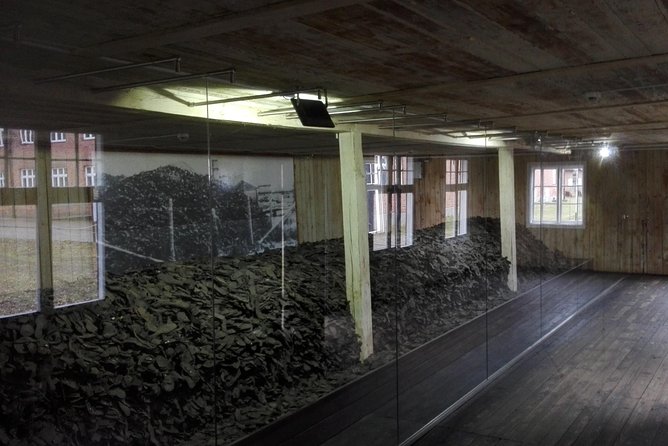
This is the kind of experience that starts the minute you leave Gdansk. The drive to Stutthof takes about 45–60 minutes depending on traffic, so you avoid the stress of public transport schedules and last-minute navigation. That matters here, because the day isn’t about ticking off sights—it’s about meeting the site with your full attention.
Stutthof itself sits apart from the city, and the distance helps shift your brain into the right mode. You’re leaving normal life behind, heading toward a place built on suffering and systematic murder. It’s not “dark tourism” for thrill-seekers. It’s remembrance, education, and paying respect.
The best part of this format is that you’re not doing the hardest part alone: getting there, buying tickets, and assembling your own plan. The tour gives you structure with a guide, which is exactly what you want in a place like this.
More guided visits to the Stutthof Museum from Gdansk

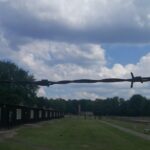

Hotel Pickup and Small-Group Comfort (Max 16)
I love an easy pickup because it keeps the day from starting with stress. For this tour, pickup is offered from any location in Gdansk (including hotels and apartments) or Sopot. You’ll get an exact pickup time by text about 12 hours before the tour. Also note: the pickup time can vary within a window of 7:30 to 9:30, depending on coordination.
Once everyone is collected, you’re off. You’re not stuck waiting around with strangers or wondering if you’re in the wrong spot. One review even mentioned that when the driver arrived early, he offered a quick walking tour of the old town—small touch, but it shows the team tries to make the start smooth.
The other big win is the cap of just 16 travelers. That small size changes how a guided visit feels. In a larger group, you can feel like you’re being moved along. With a smaller group, the guide can explain more clearly and respond to what you’re actually noticing—especially important at a site with so much to take in, and so many emotional triggers.
How the Tour Timeline Really Works (4–5 Hours Total)
Plan on about 4 to 5 hours total. The tour is built as a half-day, so you’re not spending your entire day in transit and on museum floors. Here’s the basic rhythm:
- You meet at 8:00 am for the departure schedule.
- You drive out (about 45–60 minutes).
- You get the guided museum/camp portion (listed at 2–2.5 hours with the guide, plus additional time in camp areas).
- You get a short window on your own afterward.
- You head back to Gdansk (again 45–60 minutes depending on traffic), with drop-off in your accommodation or the city center.
This pacing is a double-edged sword. It’s efficient, and that’s good—because you likely don’t want to drag this type of visit into a long, exhausting day. But if you’re the type who wants to read every caption slowly and stand with one section until it sinks in, you may wish the schedule allowed more quiet time.
Entering the Museum: What You Learn Before You Walk the Grounds
The visit starts at Muzeum Stutthof w Sztutowie with a licensed English-speaking guide. This is where context matters. Stutthof isn’t just “a camp you walk through.” You learn about persecution and occupation in Pomerania, and you also get the broader historical placement—such as the fact that it was the first Nazi concentration camp outside German territory.
Why this matters: without context, it’s easy to get lost in names, dates, and locations without fully understanding the system that made the place function. A guided start helps you recognize what you’re seeing as part of a larger plan, not a collection of random buildings.
The guides described in the tour experience are often praised for being both sensitive and detailed. Names that have stood out include Simon (who also shared context beyond the immediate site, like connections to the region and topics like amber), and Michael (praised for knowledge and sensitivity, and for explaining broader World War II context). You might also encounter guides such as Thomas or Mikey, both noted for thoughtful, thorough explanations.
Even if your guide’s style differs, the goal is the same: give you a backbone for understanding the site so the rest of the walk hits harder in the right way.
Inside Stutthof: Old and New Quarters, and the Commander’s Villa

Once you’re in the camp area, the route covers several key zones. You can expect to see:
- Old and new camp quarters
- The commander’s villa
- The areas tied to the camp’s killing machinery, including
- gas chambers
- the crematorium
- The camp victims’ monument
- The story of persecution and occupation of Pomerania
- The significance of Stutthof as an early Nazi concentration camp outside Germany
This structure helps you understand the camp as a functioning space: living and working areas, command areas, and then the place where murder was carried out. Seeing the commander’s villa is especially important because it underlines who held power and who was subject to it. It’s a hard contrast, and that contrast is the point.
You’ll also hear accounts described as terrifying mass murder during the gas chamber and crematorium portion. The guide’s job isn’t to sensationalize—it’s to tell the truth in a way that’s respectful and grounded.
One practical note: this is a site where many visitors instinctively want to photograph everything. That urge is understandable. But take a breath first. At places like this, silence and attention often feel more respectful than clicking away.
- Gdańsk City Sights & History Guided Walking Tour in English
★ 4.8 · 876 reviews - Gdansk: Firearm Shooting Experience with Instructor
★ 4.8 · 866 reviews - Gdansk: Guided Round-Trip Cruise to Westerplatte
★ 4.3 · 865 reviews - Gdańsk: Sightseeing EcoCruise around the Old Town of Gdansk
★ 4.6 · 719 reviews
The Gas Chambers and Crematorium: Why Timing Matters Here
This part of the visit is emotionally heavy. The tour explicitly includes the gas chambers and crematorium as part of the guided route. When the schedule is tight, it can feel like the pace moves faster than your emotions can process.
That’s why I appreciate that the tour includes a short reflection break afterward. The experience also adds time for you to walk, reflect, and take photos right after the guided portion: 15 minutes of free time after visiting with the guide.
If you’re worried you’ll feel rushed, here’s a way to help yourself: during the guided walk, don’t try to capture every detail on your phone. Instead, listen for a couple of anchor points the guide repeats or emphasizes. Then, during the free time, you can return to those areas with better focus.
The Short Free Window: Useful for Reflection, Not Enough for Deep Reading
After the main guided portion, you get 15 minutes on your own. This is clearly intended as a breather—time to walk slowly, reflect, or take photos without someone talking over your thoughts.
Here’s the thing: multiple people have wished for more time to read exhibits and linger. If you’re the type who wants to revisit sections, you may feel you’re being pulled back into the schedule.
Still, 15 minutes isn’t useless. Use it strategically:
- Pick one section you want to understand better.
- Read captions slowly instead of scanning.
- Stand at the monument area long enough that it shifts from “information” to “understanding.”
If you want a slower visit, you might consider pairing this with another museum time before or after, but that’s outside the scope of this half-day format.
Price and Value: What $140.43 Gets You
At $140.43 per person, this tour isn’t cheap in a “souvenir and selfies” way. But it’s priced like a serious, structured service.
Here’s the value breakdown you’re effectively paying for:
- Pickup and drop-off from your accommodation (a real time-saver)
- Small-group size (max 16)
- Licensed English-speaking guide
- Admission included for the Stutthof portion of the visit
- A guided route that covers major sites you’d struggle to plan on your own without missing context
If you were doing this independently, you’d still need transport, tickets, and a way to make sense of what you’re seeing. That “sense-making” part is what you’re buying here. And the guide is often the difference between a tour that feels like a bus ride and one that feels like education with care.
So I’d frame the cost as: you’re paying to reduce friction and increase understanding, not to collect attractions.
Getting Back: Drop-Off in Gdansk and Sopot
After your visit, the driver drops you back at your accommodation or Gdansk city center. The return ride is again about 45–60 minutes depending on traffic.
This drop-off approach is another part of the value. You don’t end up coordinating transit after a heavy emotional morning. You simply return and get on with the rest of your day.
If you plan lunch, don’t schedule it too tight right after the tour. Even with good planning, traffic and pickup coordination can shift the exact time you’re back.
Who Should Book This Tour (and Who Might Think Twice)
This tour is a strong choice if you:
- Want English guidance through the camp’s key areas
- Appreciate small groups instead of large crowds
- Prefer door-to-door pickup over figuring transit
- Plan a half-day and still want meaningful context
It’s not recommended for children under 13, and that’s sensible given the content. Also, because the experience involves walking across camp grounds and museum areas, it’s best to go with a plan for comfortable footwear and a slower mindset.
And if you already know you want hours and hours to read and reflect, the half-day format may feel short. In that case, you might consider a different visit style that allows more unstructured time.
Should You Book Stutthof From Gdansk?
Yes, if you want the easiest path to a serious, structured visit. This tour makes sense for most people because it handles the parts that usually trip people up: timing, transport, tickets, and the interpretation you need at a place like Stutthof.
I’d say book it when:
- You want an English guide and a guided route that covers the sites you shouldn’t miss (including gas chambers and crematorium)
- You care about a small group atmosphere
- You want pickup so you can spend your energy on the experience, not logistics
I’d pause or consider an alternative if:
- You know you’ll want much more than 15 minutes of personal time to read and revisit exhibits
- You prefer a fully self-paced museum visit
If you do book, come with a respectful headspace. Let the guided portion give you the structure, then use your short quiet time to absorb what you just learned—without racing past it.
FAQ
What time does the Stutthof tour start?
The tour start time is 8:00 am.
How long is the tour from Gdansk?
It runs about 4 to 5 hours total.
Is hotel pickup included?
Yes. Pickup is offered from any location in Gdansk or Sopot. Drop-off is also provided after the tour.
Do I get an exact pickup time?
You’ll receive a text message with an exact pickup time about 12 hours before the tour. The pickup time may vary between 7:30 and 9:30.
Is the tour in English?
Yes. The guide is an English-speaking guide.
How many people are in the group?
The tour caps at a maximum of 16 travelers.
How much guided time do I get inside the museum and camp?
You get prolonged guided visiting time of about 2 to 2.5 hours with the museums guide, and the camp visiting portion is part of the tour schedule as well.
Is admission included?
Yes. Admission for the Stutthof visit portion is listed as included.
Is it suitable for children?
It is not recommended for children under 13.
What is the cancellation policy?
You can cancel for free up to 24 hours before the experience starts for a full refund. If you cancel less than 24 hours before, the amount paid is not refunded.
More Tour Reviews in Gdansk
- Gdańsk City Sights & History Guided Walking Tour in English★ 4.8 · 876 reviews
- Gdansk: Firearm Shooting Experience with Instructor★ 4.8 · 866 reviews
- Gdansk: Guided Round-Trip Cruise to Westerplatte★ 4.3 · 865 reviews
- Gdańsk: Sightseeing EcoCruise around the Old Town of Gdansk★ 4.6 · 719 reviews
- Main Town Gdańsk Walking Tour★ 5.0 · 644 reviews
More Stutthof Museum Memorial Visits
- Gdansk: Stutthof Concentration Camp Regular Tour★ 4.7 · 361 reviews
- Stutthof Concentration Camp English Tour with Gdansk Hotel pickup★ 4.5 · 73 reviews
- Stutthof Concentration Camp:Guided Tour with Transportation★ 4.7 · 57 reviews
- Stutthof Concentration Camp tour including transfer from Gdansk★ 5.0 · 34 reviews
- Stutthof Concentration Camp Half-Day Private Tour★ 4.8 · 29 reviews
Still deciding? Here are more Gdansk tours and Pomerania day trips we have written up





Stutthof Museum Memorial Tours, compared.
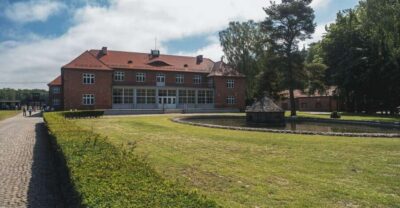 ★ 4.7Stutthof Concentration Camp Regular TourFrom $128361 reviews
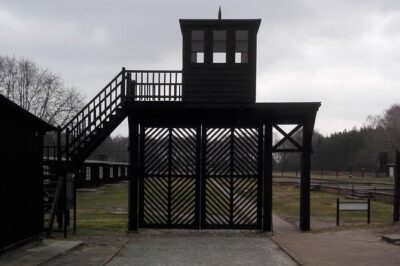 ★ 4.5Stutthof Concentration Camp English Tour with Gdansk Hotel pickupFrom $14773 reviews
 ★ 4.7Stutthof Concentration Camp:Guided Tour with TransportationFrom $26957 reviews
 ★ 5.0Stutthof Concentration Camp tour including transfer from GdanskFrom $15134 reviews
 ★ 4.8Stutthof Concentration Camp Half-Day Private TourFrom $46129 reviews
 ★ 4.7Private transportation to the Stutthof Concentration Camp 4hFrom $22728 reviews
 ★ 4.5Stutthof Concentration Camp: Private Guided Tour with TransportFrom $31526 reviews
 ★ 5.0Stutthof Concentration Camp Private Tour from GdanskFrom $18518 reviews
Browse the lists this tour appears in